
The Home Ignition Zone, Explained
FireSmart Canada and NFPA Firewise divide the space around your home into zones. Here's what each one means and what to buy for it.
Why zones, not distance
Research from the Insurance Institute for Business & Home Safety and Canada's FireSmart program shows that most homes are lost not to a wall of flame but to embers landing on or near the house, and to small fires spreading through fuel that's touching the structure. So the framework works from the house outward: the closer to the walls, the stricter the rules.
Zone 0 — Immediate zone (0 to 1.5 m / 5 ft)
Nothing combustible. Replace bark mulch with crushed rock or gravel. Move firewood, propane cylinders, planters with dry plants, doormats and patio cushions. Screen under decks with 1/8 in metal mesh. Clean gutters and install metal gutter guards. Replace or screen every vent. This is where ember-resistant vents, stainless mesh, gutter guards and propane covers pay for themselves.
 Illustration
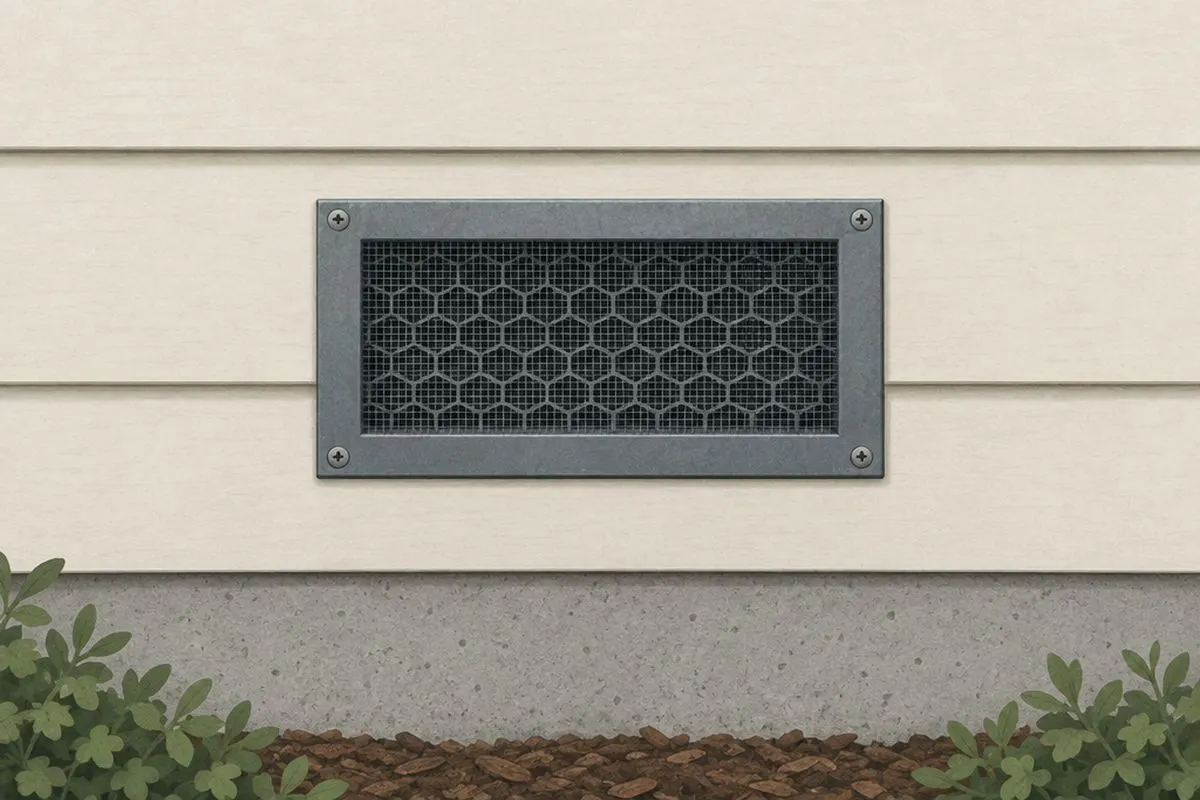
Vulcan Ember-Resistant Vents
WUI-listed vents with an intumescent honeycomb that expands and seals at roughly 350°F, plus 1/8 in mesh. Available in soffit, gable, foundation and dormer formats in standard sizes.
 Illustration
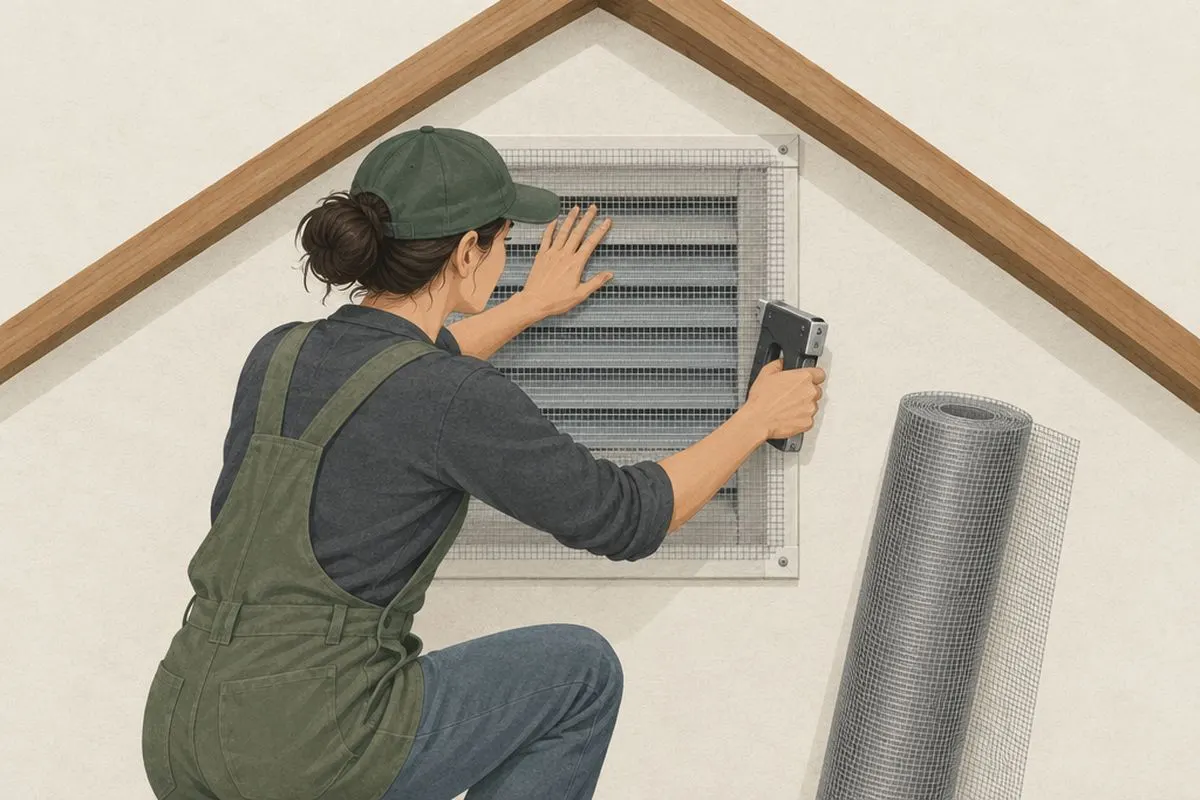
1/8 in Stainless Steel Ember Mesh
A roll of 1/8 in (3 mm) stainless mesh stapled or screwed over existing vents is the recommended retrofit when replacement isn't practical. Also use it to close gaps under decks and at the base of siding.
 Illustration
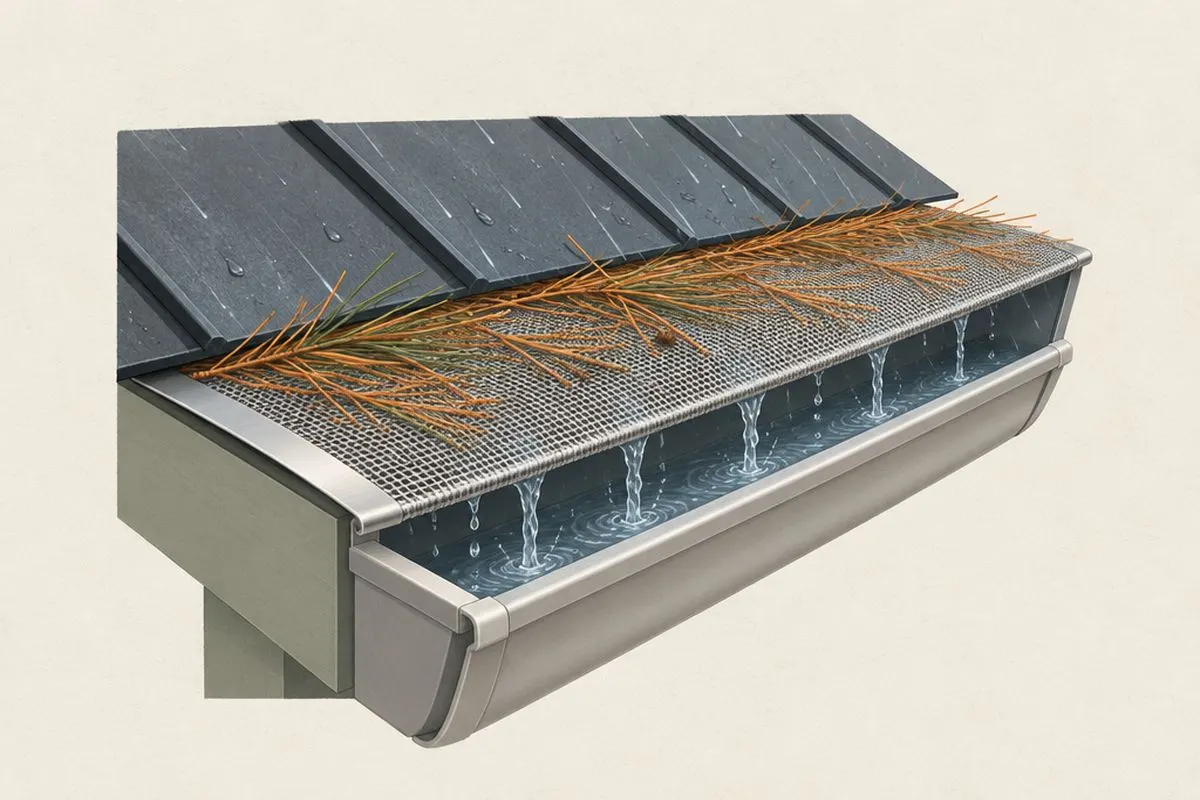
Stainless Micro-Mesh Gutter Guard
Stainless micro-mesh on an aluminum frame blocks pine needles and seeds while letting water through. Non-combustible by design, which is the whole point in a wildfire zone.
 Illustration
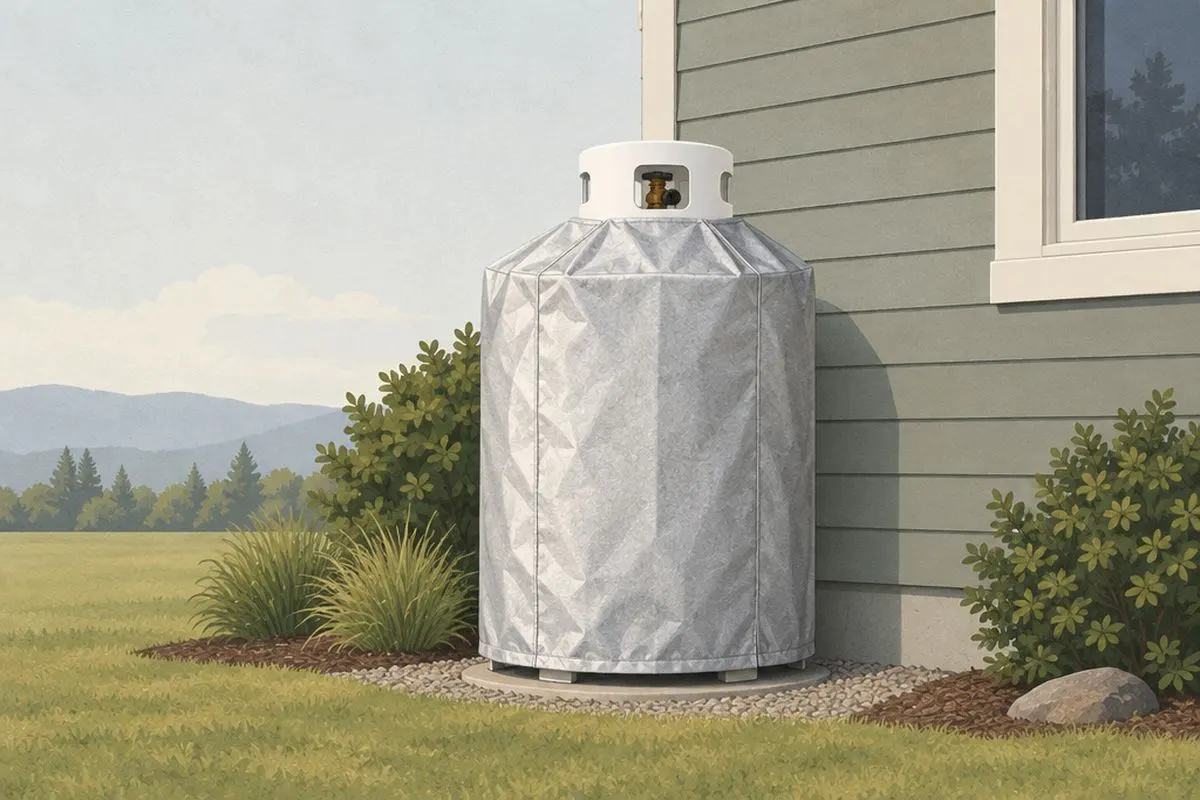
Fire-Resistant Propane Tank Cover
A silica or aluminized cover for BBQ and heating propane cylinders. Tanks venting near a house are a major secondary ignition source; a cover buys time and reduces radiant heat on the tank.
Zone 1 — Intermediate zone (1.5 to 10 m / 5 to 30 ft)
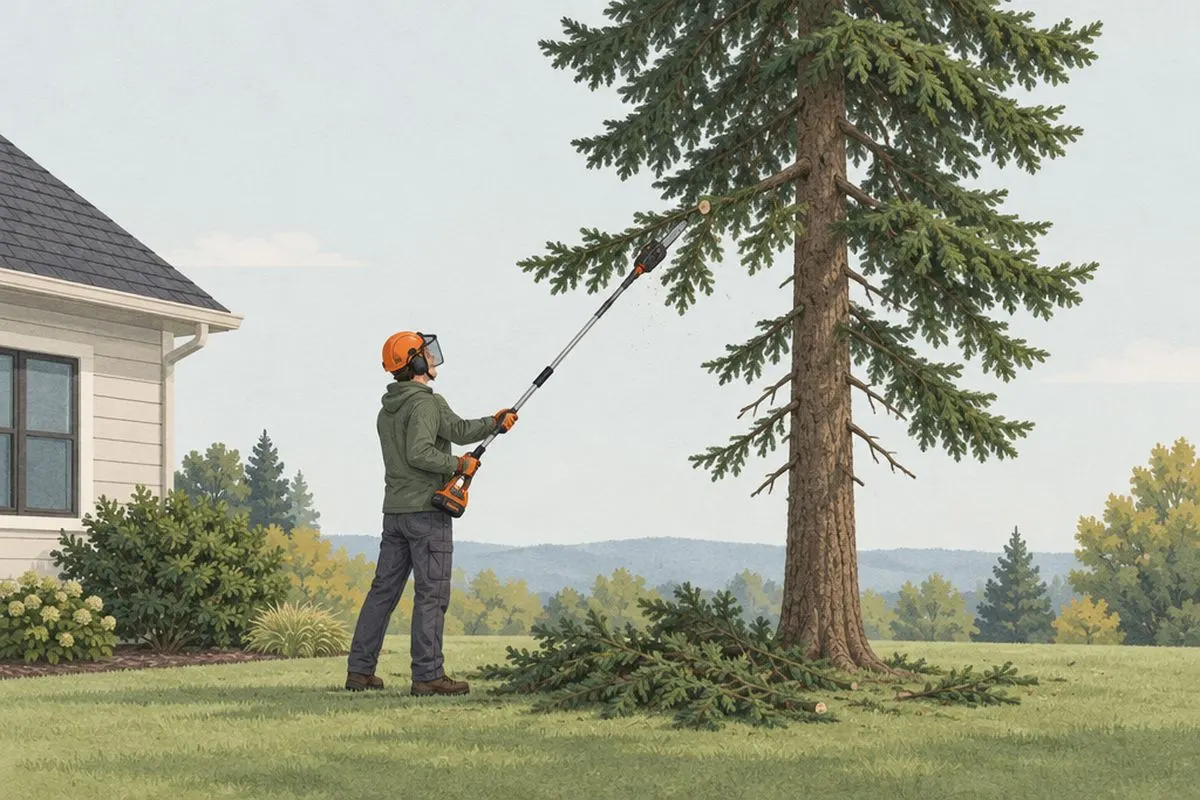
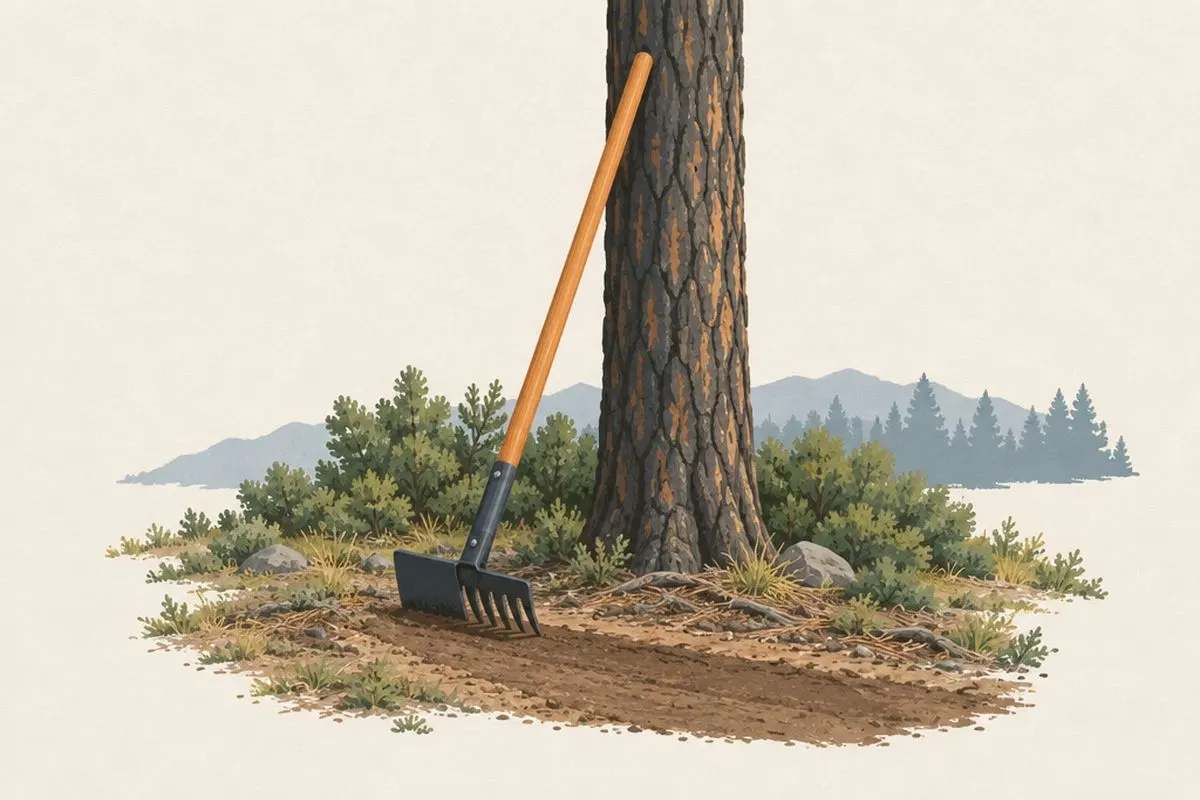
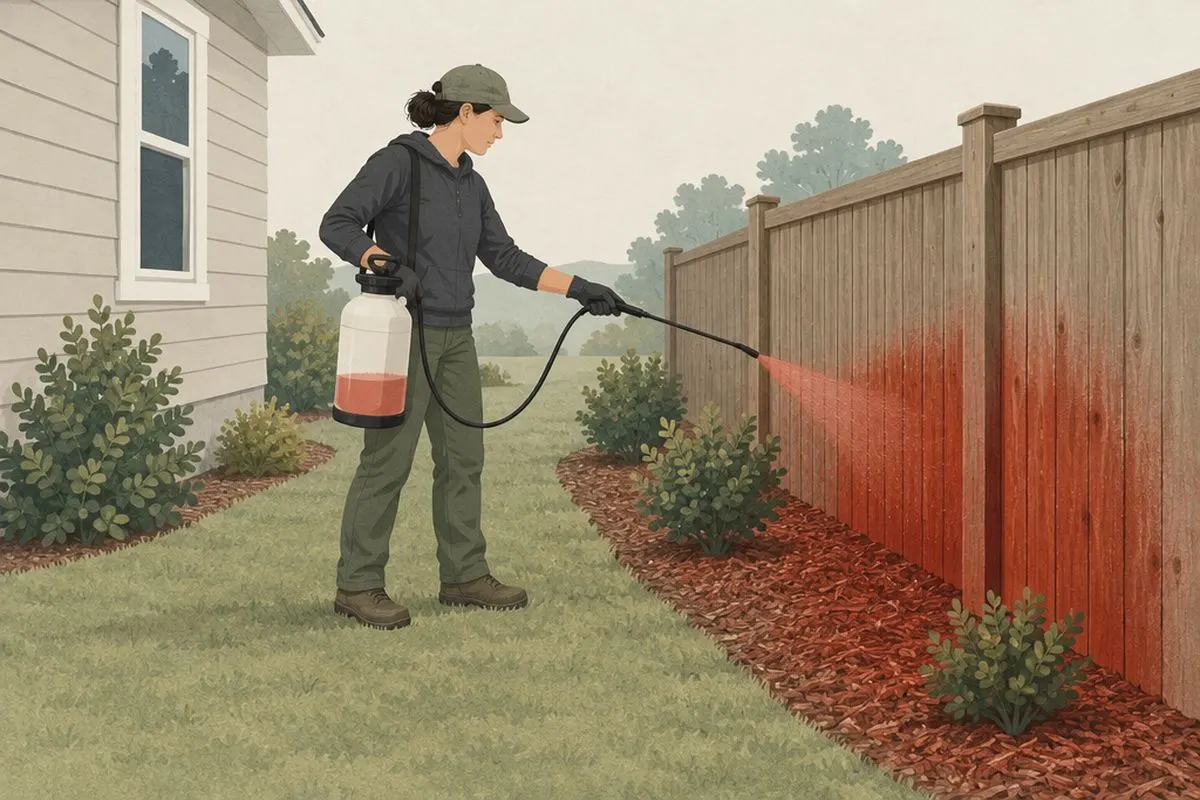
Lean, clean and green. Mow grass short, limb conifers to 2 m off the ground, remove dead vegetation, and space trees so crowns don't touch. Keep sheds and woodpiles out of this zone if you can. A pole saw and a McLeod rake are the tools; a seasonal coat of long-term retardant on fences and decks adds a margin.
 Illustration
Battery Pole Saw
Limbing conifers to 2 m (6 ft) off the ground removes the ladder fuel that carries a ground fire into the canopy. A battery pole saw makes it a weekend job instead of a contractor call.
 Illustration
McLeod Fire Rake / Hoe
The combination rake-and-hoe wildland crews use to scrape fuel down to mineral soil. Ideal for clearing needle litter, cutting a small control line and smothering spot fires.
 Illustration
Phos-Chek Wildfire Home Defense
The consumer version of the red retardant dropped from air tankers. Applied days or weeks ahead to fences, decks, mulch and siding; stays effective until rinsed by heavy rain. Dries clear.
Zone 2 — Extended zone (10 to 30 m / 30 to 100 ft)
Reduce fuel density. Thin trees, remove ladder fuels and dead material. You're not clearing the forest — you're making sure a fire arriving here drops to the ground instead of running through the canopy toward the house.
The structure itself
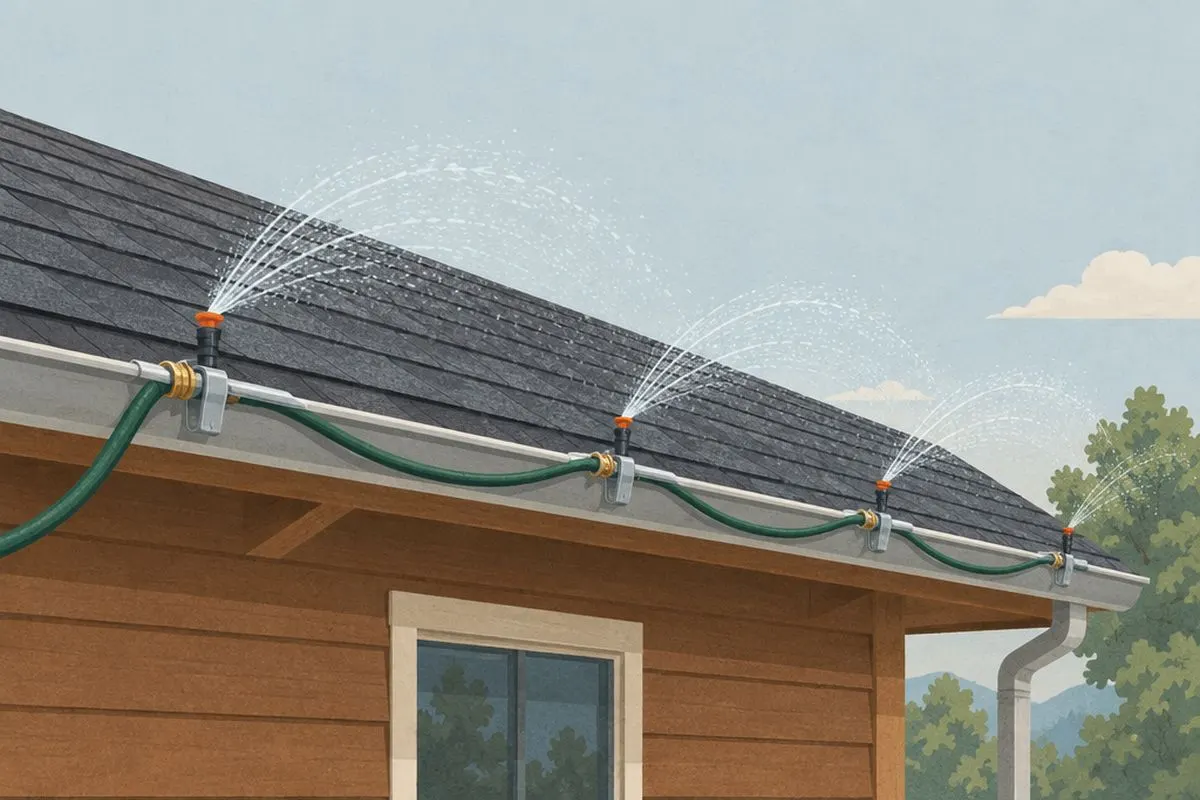
Class A roofing, metal gutters, ember-resistant vents, dual-pane tempered windows, non-combustible siding at the base of walls, and enclosed eaves. Exterior sprinklers and gels are the active layer you add on top of a hardened structure — not a replacement for one.
 Illustration
WASP Wildfire Protection Full Kit
Canadian-designed gutter-clip sprinkler heads that install in minutes without tools and run off a standard garden hose. The full kit covers a typical roofline and includes hoses and splitters.
 Illustration
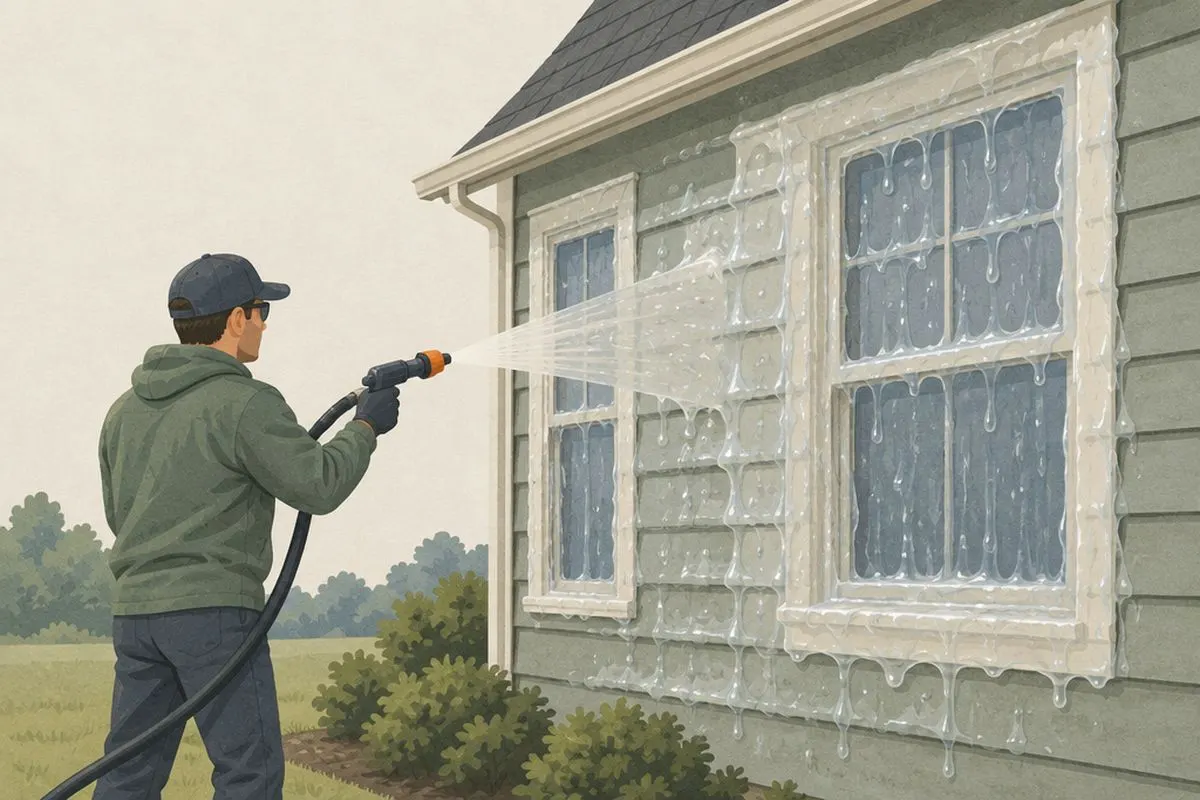
Barricade Fire Blocking Gel
A superabsorbent polymer gel that clings to vertical surfaces and holds a water barrier for hours. Used by fire departments; the home kit includes a hose-end applicator. Apply when evacuation is ordered.
 Illustration
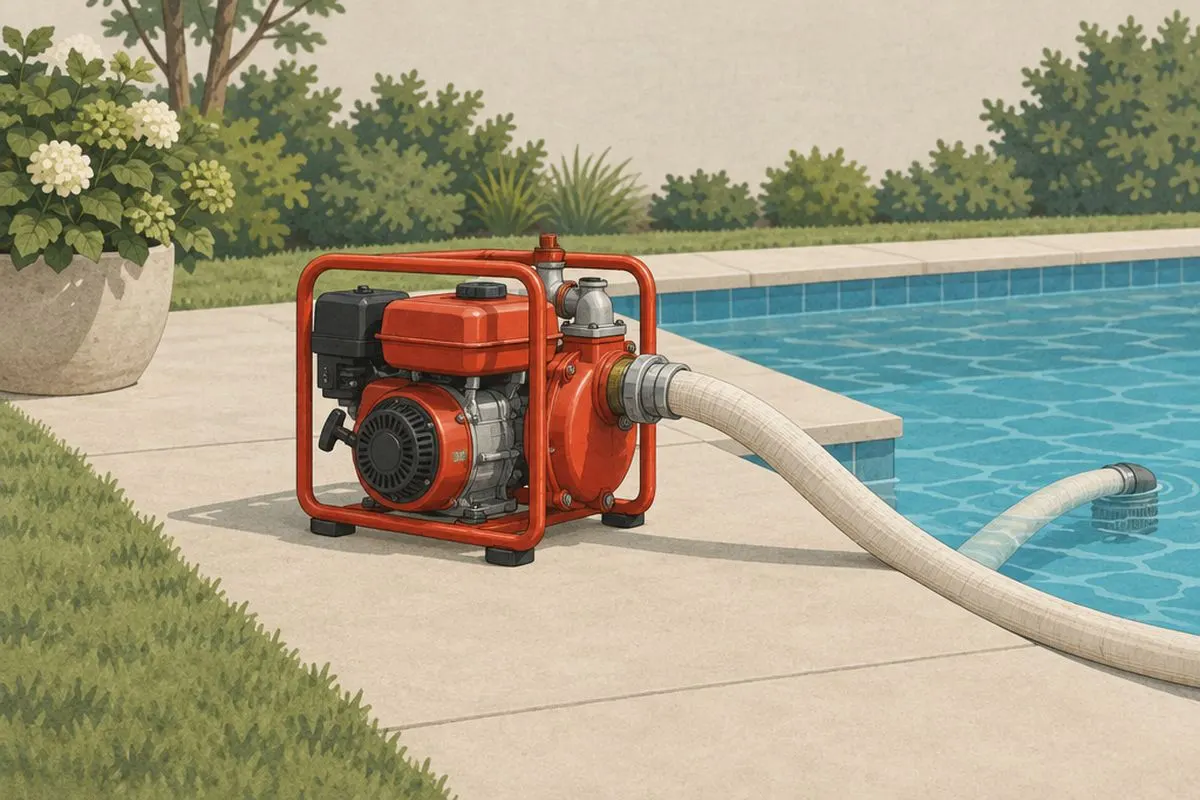
Portable Gas Fire Pump (1.5 in)
A high-pressure 1.5 in gas pump moves water from a pool, pond or tank at enough pressure to run a roof sprinkler kit plus a hose line. The Honda-engine models are the reliability benchmark; buy the high-pressure variant, not the trash-pump variant.