
Dry Hydrants & Rural Water Supply
If there is no hydrant on your road, the water has to come from somewhere.
Past the end of the municipal main, the fire that reaches your house will be fought with whatever water arrives on the truck plus whatever your property can supply. A dry hydrant is the standard answer: a fixed pipe from a pond, stream or buried cistern out to a connection a pumper can draft from at the roadside. It is unglamorous civil engineering, it is usually installed in cooperation with your fire department, and on a rural property it is worth more than almost anything else you could spend the money on — including, in both countries, through the way your area is graded for insurance.
Our picks
3 guides · price bands $ to $$$$
 Illustration
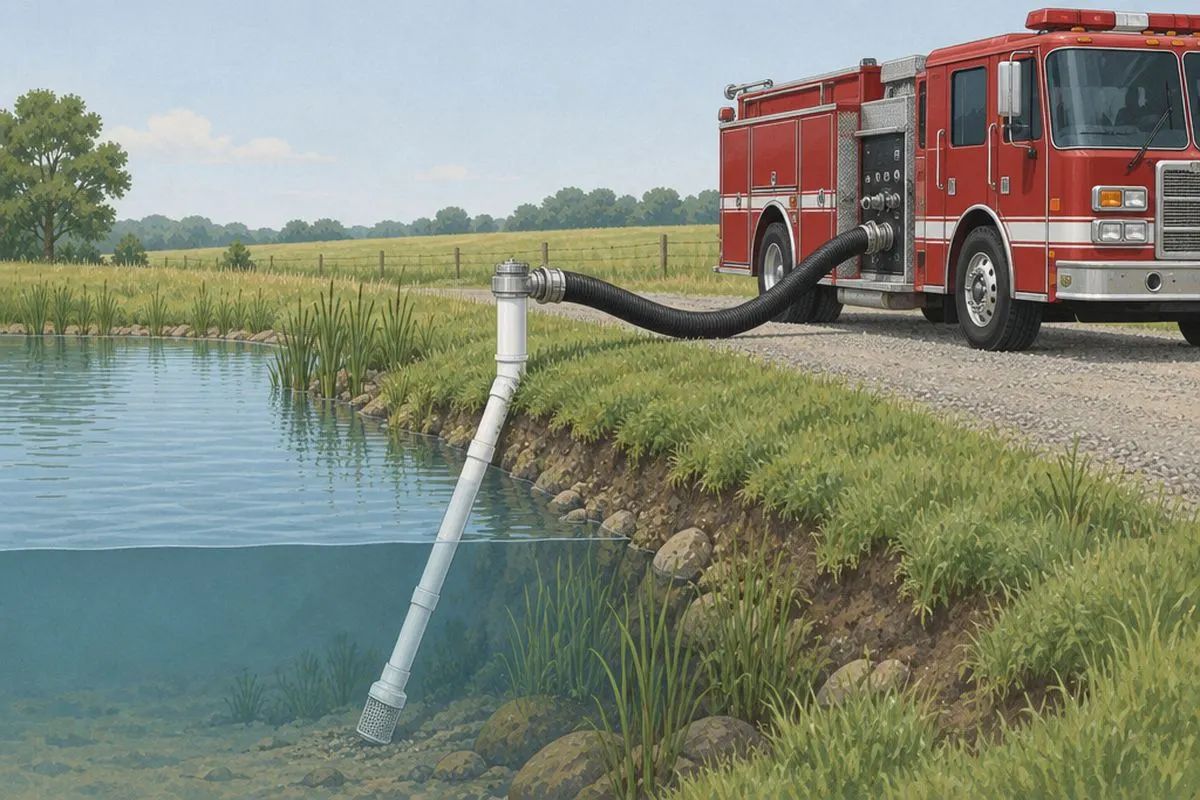
Dry Hydrant Assembly (6 in)
A fixed pipe from a pond, stream or buried cistern to a roadside connection a fire engine can draft from. No water sits in it — the pump pulls a vacuum and atmospheric pressure pushes the water up.
 Illustration
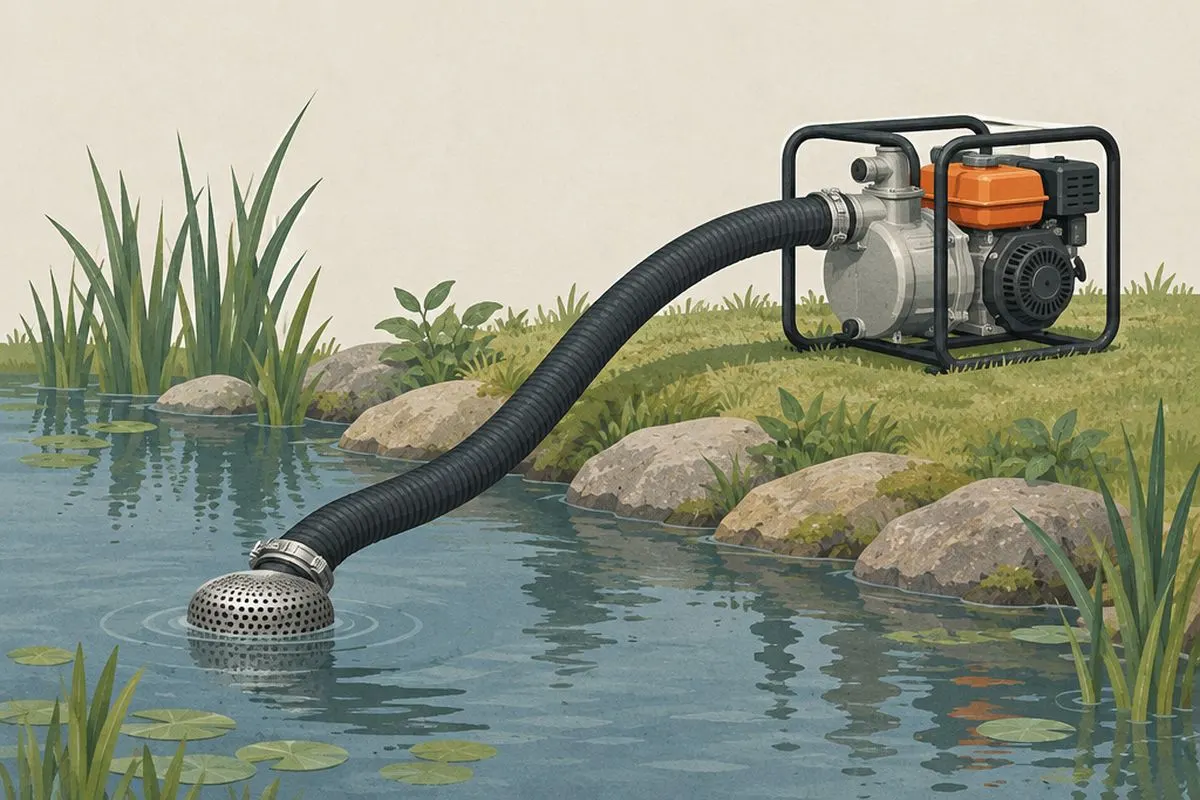
Hard Suction Hose & Low-Level Strainer
Rigid, non-collapsing hose that lets a pump draw from an open water source, with a strainer that keeps debris out and prevents the vortex that loses your prime. The portable alternative to a fixed dry hydrant.
 Illustration
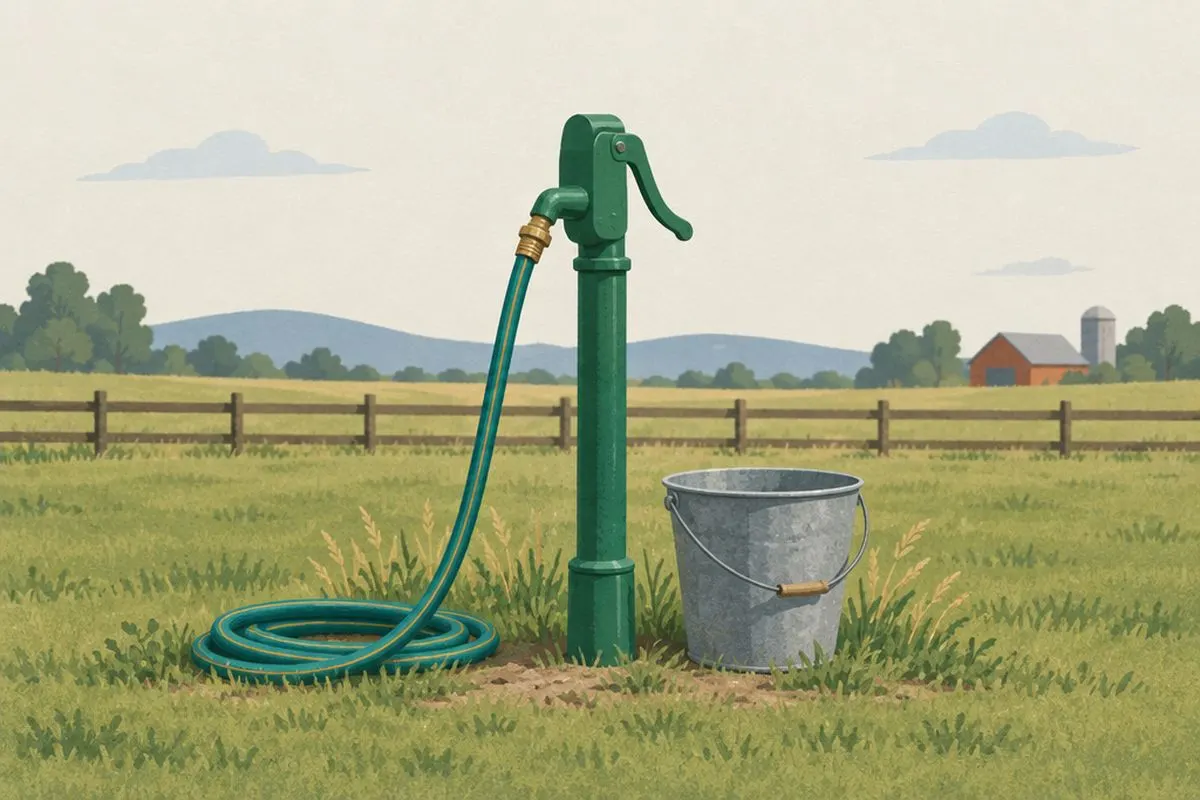
Frost-Free Yard Hydrant
A standpipe with its valve below the frost line that drains after each use, giving year-round outdoor water well away from the house. Genuinely handy. Not, despite the name, firefighting infrastructure.
Before you buy
- Physics sets the limit before budget does. A pumper can lift water about 22 ft in ideal conditions, and NFPA 1142 advises designing for no more than 10 to 12 ft of lift. A source below that threshold is worth far more than a bigger one further down a bank.
- Volume that counts is pumpable volume, not pond volume. The usable depth runs from the lowest foreseeable water level down to the top of the strainer. NRCS wants at least 30,000 gallons pumpable, or 250 gpm sustained for two hours.
- Talk to your fire department before you dig, not after. They have to approve the design, the connection has to match their hard suction thread under NFPA 1963, and they should do the acceptance flow test.
- Access is half the installation. All-weather road, room for a loaded pumper to get in and turn, no more than 20 ft of hard suction to the connection, at least 100 ft from any structure, and reflective signage the crew can find at night.
- In Canada, the bigger insurance lever is usually your department's Superior Tanker Shuttle Service accreditation rather than your own tank — and an accessible dry hydrant on your land is often part of what gets them there.