Reader-supported. Some links are affiliate links — see our disclosure. Evacuate when ordered; no product replaces leaving early.
Best gutter-mount kit

WASP Wildfire Protection Full Kit

WASP Wildfire Canada & United States $$$ · Kit pricing varies by number of heads and hose length

Canadian-designed gutter-clip sprinkler heads that install in minutes without tools and run off a standard garden hose. The full kit covers a typical roofline and includes hoses and splitters.

Why we like it

  • No-tool gutter clip install
  • Made in Canada, widely stocked by Canadian retailers
  • Runs off garden hose pressure

Watch out for

  • Depends on municipal pressure unless paired with a pump
  • Coverage limited on steep or multi-level roofs
Best for

Homeowners who want a same-day DIY sprinkler defense.
Read the full market guide — costs, install effort and alternatives ↓
Market guide

The whole commitment, end to end

What this actually is, what the market looks like, what it really costs, and how much of your time it wants — before you spend anything.

Buying it Easy
Installing it Trivial
Living with it Easy
Up front

CAD $700–$2,400 / USD $550–$1,900 depending on head count and hose length

Lead time

In stock most of the year; expect 2–6 week backorders from June through August

Time to install

45–90 minutes for a typical bungalow, first time

How it works

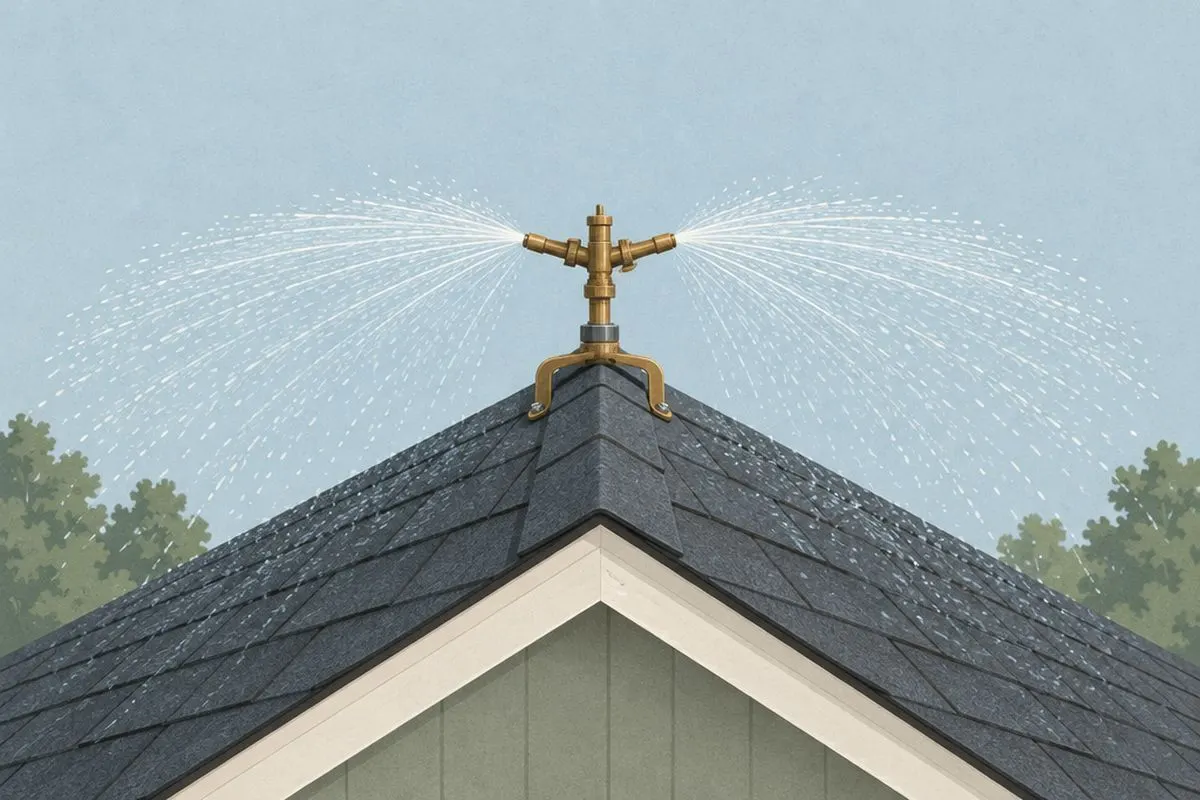
Plastic sprinkler heads clip over the lip of your eavestrough and throw a low arc of water back across the roof deck and down the wall. The point is not to soak the shingles — it is to keep the roof, the fascia and the first metre of wall wet enough that an arriving ember goes out instead of taking hold, and to raise humidity in the air immediately around the house. You run it for the hours either side of a fire front passing, then shut it off.

What the market looks like

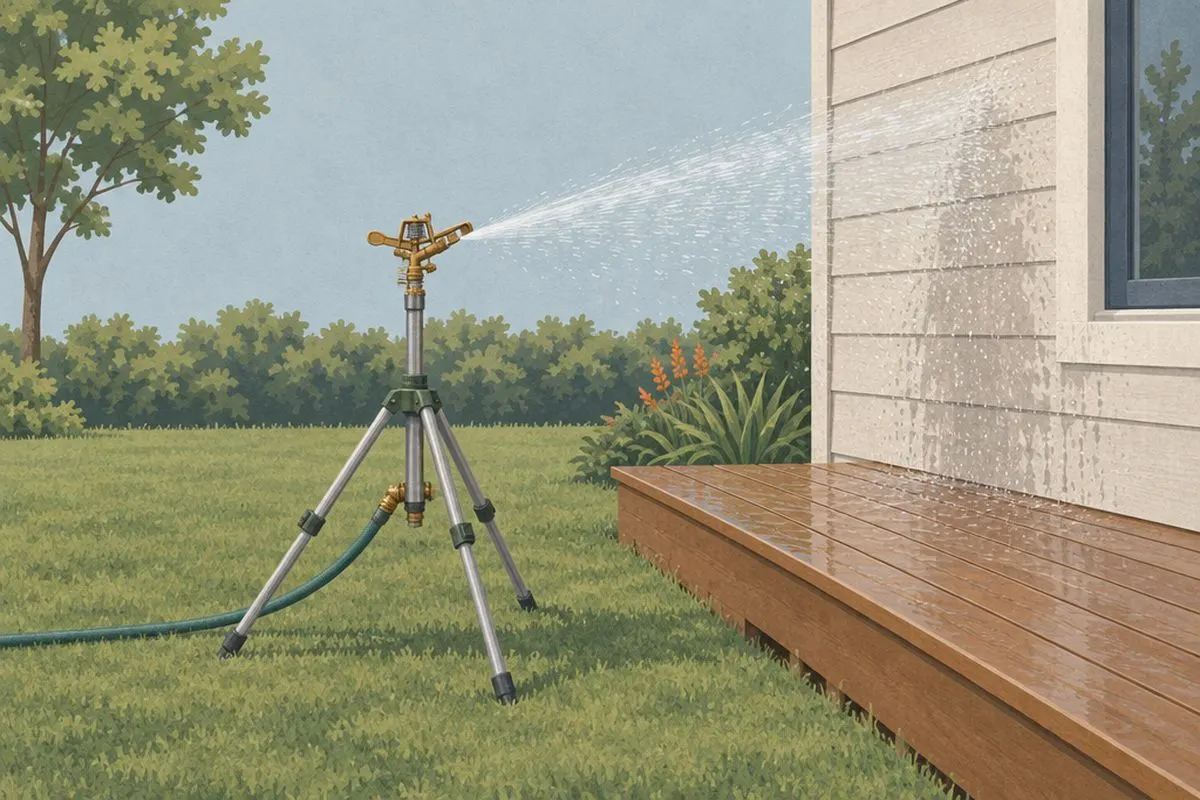
Gutter-mount ember-defense kits are a small market with maybe a dozen serious players, most of them Canadian and most founded after the 2016 Fort McMurray fire. They cluster into three tiers. At the bottom, generic tripod and impact sprinklers repurposed from irrigation — cheap, no roof coverage. In the middle, clip-on kits like WASP, Platypus and Flash: purpose-built heads, garden-hose fed, $600–$2,500 depending on head count. At the top, permanently plumbed systems like Frontline with dedicated pumps, tanks and remote activation, at $15,000–$40,000 installed. WASP sits squarely in the middle tier and competes mostly on being tool-free and Canadian-stocked rather than on throw distance or build quality, where Platypus arguably edges it.

Features that actually matter

Gutter-clip mounting
Heads hook over a standard 5 in K-style eavestrough. No drilling, no roof penetration, no ladder work beyond reaching the gutter line.
Garden-hose supply
Standard 3/4 in GHT fittings. Kit includes splitters and hose so the whole roofline runs off one or two outdoor taps.
Modular head count
Kits are sold by head count — typically 4, 6, 8 or 12 — so you scale to roofline length rather than buying a fixed package.
Low-pressure operation
Designed to give useful coverage at 30–40 psi, which is what a residential tap actually delivers with several heads open.
Dry storage
Heads come off in seconds and live in a bin the rest of the year, so nothing sits on the house degrading in UV.

What it really costs

Up front
CAD $700–$2,400 / USD $550–$1,900 depending on head count and hose length
Consumables
None. Water is the only running cost — roughly 1,200–2,500 L per hour for a full roofline, which matters if you are on a well or a cistern.
What else you'll need
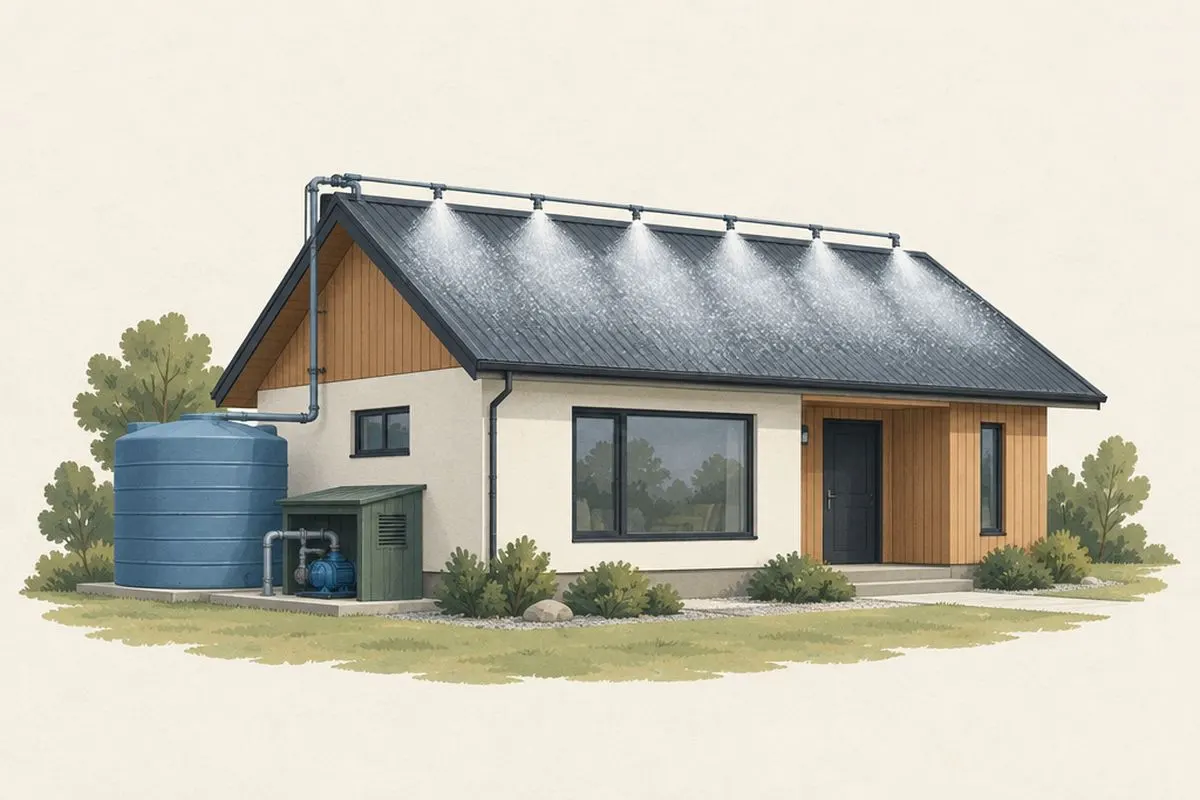
Budget CAD $150–$400 for extra hose and a Y-splitter or two if your taps are badly placed. If you want it to work when the hydrants drop, add a pump and tank — that is CAD $2,000–$8,000 and is the real cost of this category.
Over five years
Effectively the purchase price. Heads are plastic and replaceable individually at CAD $60–$120 each.

Figures are typical street prices in Canadian and US dollars as of September 2026, gathered from public retail listings. They move with the season and with the exchange rate — treat them as a planning band, not a quote.

How it differs from the alternatives

Versus Platypus
WASP installs faster and is stocked more widely in Canada. Platypus throws further per head and is better on steep or complex rooflines, and costs a little more.
Versus a tripod sprinkler
A $60 tripod wets the yard and a bit of wall. It does not put water on the roof deck, which is where embers land. Different job, tenth the price.
Versus Frontline
Frontline is permanent, pump-fed and can be triggered from your phone from 400 km away. WASP requires you to be home with time to spare. That is the whole difference, and it is a big one.
What it is not
This is not a fire-suppression system and no insurer will discount your premium for it. It is ember mitigation.
01

Buying it

Effort Easy

Where: Direct from WASP's Canadian store, through Flash Wildfire Services, and via a handful of rural hardware co-ops in BC and Alberta. US buyers generally order direct and pay cross-border shipping.

Lead time: In stock most of the year; expect 2–6 week backorders from June through August

Buy in the winter. Every Canadian supplier in this category sells out the week a major fire makes national news, and the backorder queue does not care that you are the one under the smoke column.

02

Installing it

Effort Trivial

Time: 45–90 minutes for a typical bungalow, first time

You'll need: Ladder · Garden hose · Optional: hose clamps for tidy routing

The install itself is genuinely easy. The part people underestimate is the dry run: you need to actually turn it on once, walk the perimeter, and find the two corners the spray does not reach. Do that in April, not in August.

03

Living with it

Effort Easy

Test it every spring and re-run the coverage walk. Heads go back in the bin after fire season. If you leave them clipped on year-round, expect UV embrittlement in 3–5 years.

If not this, then what

  • Platypus Roof SprinklerBetter throw, better on steep roofs, slightly fiddlier to mount.
  • Tripod impact sprinklersA tenth the cost, a fraction of the protection. Worth owning as a supplement for the yard and fence line regardless.
  • Frontline or a local installer's permanent systemTen to twenty times the price, and the only option if you may not be home when it matters.
Our verdict

The default first sprinkler purchase for a Canadian homeowner who will be on site. Its real weakness is not the product, it is the water supply behind it — which is why we keep telling people to buy the pump before they buy the fancier heads.

We don't take payment for placement and we don't sell these products. If you think we've got something wrong here, tell us — we'll correct it.