Reader-supported. Some links are affiliate links — see our disclosure. Evacuate when ordered; no product replaces leaving early.
Best home fire pump

Portable Gas Fire Pump (1.5 in)

Various (Honda WX / Mark 3-style / Koshin) United States & Canada $$$ · Buy with a suction kit and foot valve

A high-pressure 1.5 in gas pump moves water from a pool, pond or tank at enough pressure to run a roof sprinkler kit plus a hose line. The Honda-engine models are the reliability benchmark; buy the high-pressure variant, not the trash-pump variant.

Why we like it

  • Independent of municipal water
  • Drives sprinklers and hose simultaneously
  • Also useful for flood pumping

Watch out for

  • Gas storage and monthly test-runs required
  • Noisy; must run outdoors
Best for

Any home with a pool, pond or storage tank.
Read the full market guide — costs, install effort and alternatives ↓
Market guide

The whole commitment, end to end

What this actually is, what the market looks like, what it really costs, and how much of your time it wants — before you spend anything.

Buying it Moderate
Installing it Moderate
Living with it Hard
Up front

CAD $1,200–$8,000 / USD $900–$6,000. The honest homeowner band for something that will actually run roof sprinklers is CAD $2,500–$5,000.

Lead time

2–8 weeks for serious units; longer in summer

Time to install

Setup 20–40 minutes; siting and plumbing a permanent draft point, a day

How it works

A petrol engine driving a centrifugal pump that draws water from a tank, pond, pool, creek or cistern and pushes it out at 1.5 inch fire-hose pressure. It is the component that makes every other water-based defence keep working after municipal pressure drops — which it reliably does during a major fire, when the whole neighbourhood is drawing at once and hydrants are being pumped by crews.

What the market looks like

Portable fire pumps split into three tiers. Agricultural and utility transfer pumps at CAD $400–$1,200 move volume at low pressure — fine for filling a tank, inadequate for sprinklers on a roof. Genuine light portable fire pumps — the Wick, Mark-3 and Honda-powered equivalents used by forestry crews — run CAD $2,500–$8,000 and deliver the pressure that actually pushes water uphill through hose to a roofline. Between them sit a growing number of CAD $1,000–$2,500 units marketed at homeowners, of variable honesty about their pressure curves. The specification that matters is not horsepower, it is the pump curve: pressure delivered at your required flow, at your elevation.

Features that actually matter

Pressure at flow
The only number that matters. You want a curve, not a headline psi. Sprinklers on a two-storey roof need roughly 50–80 psi at the head after friction and elevation losses.
1.5 in fire-hose fittings
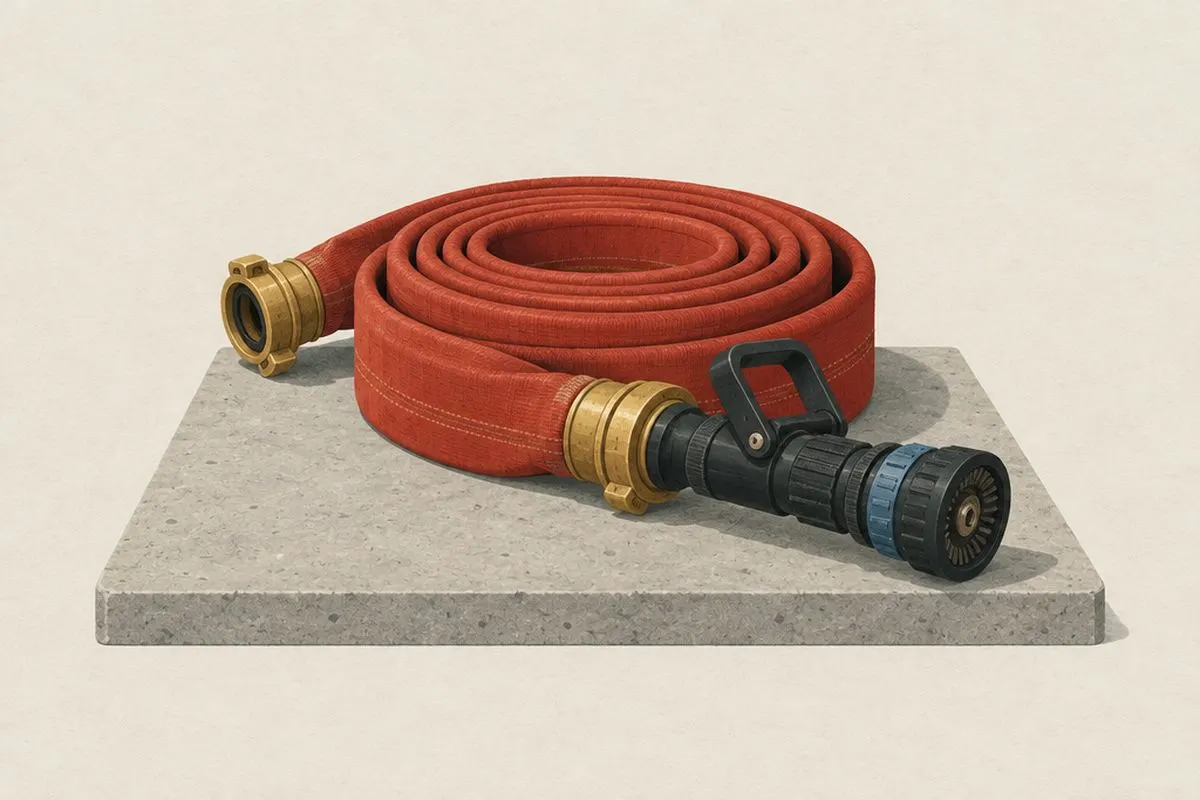
NPSH or NH threads, so it connects to real fire hose rather than garden hose. Adapters exist but every fitting costs you pressure.
Self-priming or foot-valve draft
Determines how quickly you can start drawing from a static source and how much fuss the lift is.
Four-stroke engine
Easier fuel, better starting after storage, and no mixing errors under stress. Two-strokes are lighter, which forestry crews care about and you do not.
Electric start on some models
Worth having if anyone in the household will struggle with a pull cord.

What it really costs

Up front
CAD $1,200–$8,000 / USD $900–$6,000. The honest homeowner band for something that will actually run roof sprinklers is CAD $2,500–$5,000.
Consumables
Fuel — CAD $20–$60 per hour of running for larger units. Oil, spark plug, impeller wear rings over time.
What else you'll need
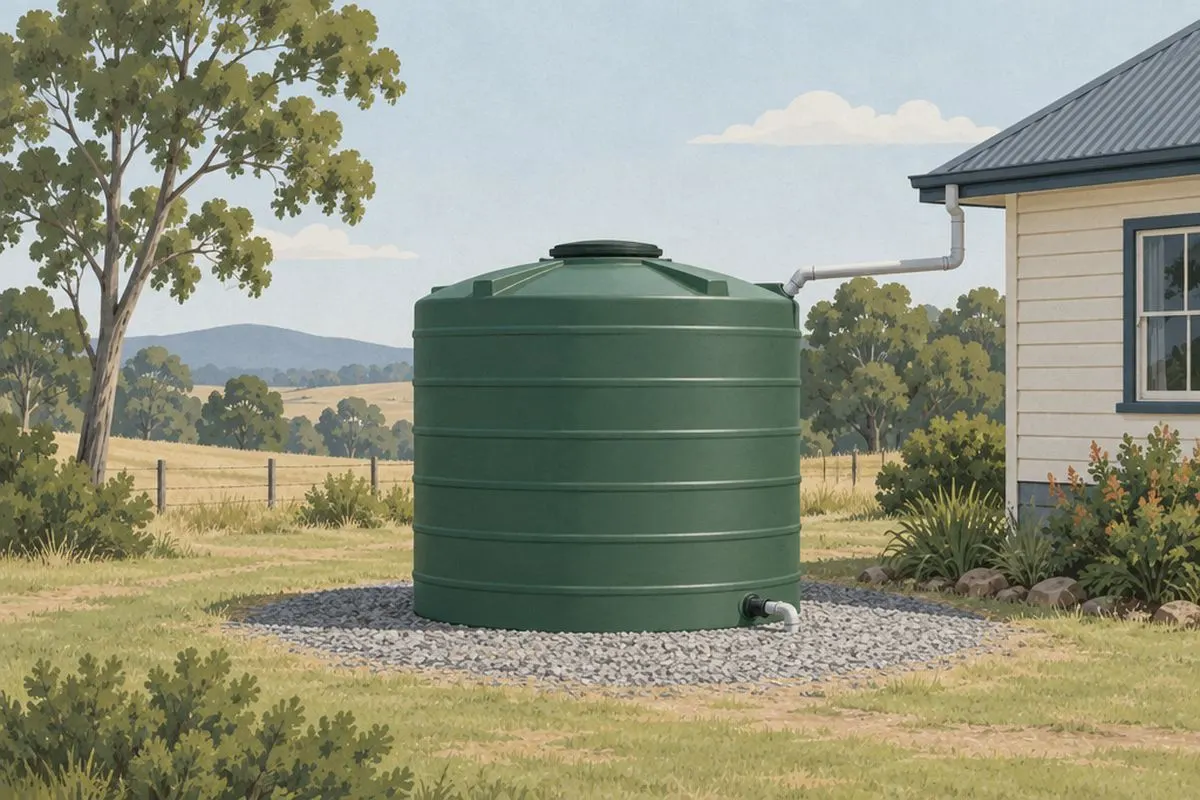
This is where budgets break. Hose and nozzle: CAD $500–$1,500. Suction hose and strainer: CAD $200–$500. Water source — a tank is CAD $2,000–$8,000. Fuel storage cans. A pump with nothing to draw from is furniture.
Over five years
CAD $400–$1,200 in service, fuel stabiliser and the annual test-run fuel. Budget a carburettor clean at least once.

Figures are typical street prices in Canadian and US dollars as of September 2026, gathered from public retail listings. They move with the season and with the exchange rate — treat them as a planning band, not a quote.

How it differs from the alternatives

Versus relying on the municipal tap
The whole argument. In a significant interface fire, system pressure drops, sometimes to nothing, exactly when your sprinklers need it. A pump and a tank is the difference between a defence that runs and a defence that stops.
Versus a transfer pump from the farm store
A CAD $600 transfer pump moves a lot of water at low pressure. It will fill a tank and it will not push water to a roofline through 30 m of hose. Check the curve, not the price.
Versus a permanently installed system's pump
A portable can be moved, lent to a neighbour and taken to a second property. A fixed pump starts from your phone. Choose on whether you will be present.
The neighbourhood angle
One good pump and 200 m of hose shared between four households is a common and sensible arrangement in rural BC and Alberta. It also means someone has to own the maintenance.
01

Buying it

Effort Moderate

Where: Forestry and firefighting equipment distributors, wildfire equipment specialists such as Flash Wildfire Services, and some rural equipment dealers. Not, generally, a big-box store.

Lead time: 2–8 weeks for serious units; longer in summer

Take your numbers to the supplier: hose length, elevation from water source to highest sprinkler, number of heads and their flow rating. A dealer who cannot turn that into a pump recommendation with a curve is selling you a box.

02

Installing it

Effort Moderate

Time: Setup 20–40 minutes; siting and plumbing a permanent draft point, a day

You'll need: Pipe wrench · Suction hose and strainer · Fuel cans · A level pad or platform

Decide the pump's home now: a level, non-combustible pad near the water source, out of the weather, with the suction line short and the lift under about 5 m. A pump with a long, high suction lift will not prime when you need it and you will not have time to work out why.

03

Living with it

Effort Hard

This is the highest-maintenance item on the site and the one most likely to fail from neglect. Run it monthly through fire season and at least quarterly otherwise. Use fuel stabiliser or drain the carburettor. Service annually. A pump that has sat untouched for eighteen months will not start on the day.

If not this, then what

  • A permanently installed pump as part of a Frontline-type systemStarts remotely, costs far more, is somebody else's maintenance responsibility if you buy a service plan.
  • A shared neighbourhood pumpA quarter the cost each. Requires an agreement about storage, maintenance and who gets it first.
Our verdict

If you are only going to spend serious money once in the water category, spend it here rather than on better sprinkler heads. And then accept that you have bought an engine, with everything that implies — the pump that fails is almost always the pump nobody started for a year.

We don't take payment for placement and we don't sell these products. If you think we've got something wrong here, tell us — we'll correct it.