
Why Houses Burn When the Forest Doesn't
Post-fire photos keep showing destroyed homes surrounded by green trees. Understanding why is the single most useful thing a homeowner can learn.
The photograph that explains everything
After almost every major interface fire, the same image circulates: a street of burned-out foundations, and standing around them, trees that are scorched but very much still there. People read it as a curiosity, or as evidence that the fire behaved strangely.
It is neither. It is the central fact of how houses are lost, and Jack Cohen — the US Forest Service scientist whose research produced the Home Ignition Zone concept — has spent a career pointing at it. If the fire had swept through as a continuous wall of flame, the vegetation would be gone too. It isn't. Which means the houses did not burn because a wildfire rolled over them. They burned one at a time, from embers and from each other.
Cohen's framing is that community fire disasters are a structure ignition problem, not a wildfire intensity problem. That sounds like a semantic distinction. It is actually the difference between a problem you cannot do anything about and one you can.
Embers travel, and they arrive first
Embers — firebrands — lift off the fire front and land ahead of it, sometimes kilometres ahead. They arrive in showers, and they do not need to land on something dramatic. They need a gutter with needles in it, a doormat, a bark mulch bed, a gap between deck boards, an open vent.
You will see it written that embers cause up to 90% of home ignitions. That figure is worth treating carefully: it traces back to an industry press release rather than a formal damage survey, and no rigorous split between embers, radiant heat and direct flame contact has been published. What post-fire investigation does establish firmly is that embers and burning neighbouring structures, rather than an advancing flame front, account for the great majority of losses.
The practical consequence is that the fire does not have to reach your property for your house to be at risk, and that most of what saves a house is unglamorous. Screened vents. Clean gutters. Nothing combustible against the wall.
 Illustration
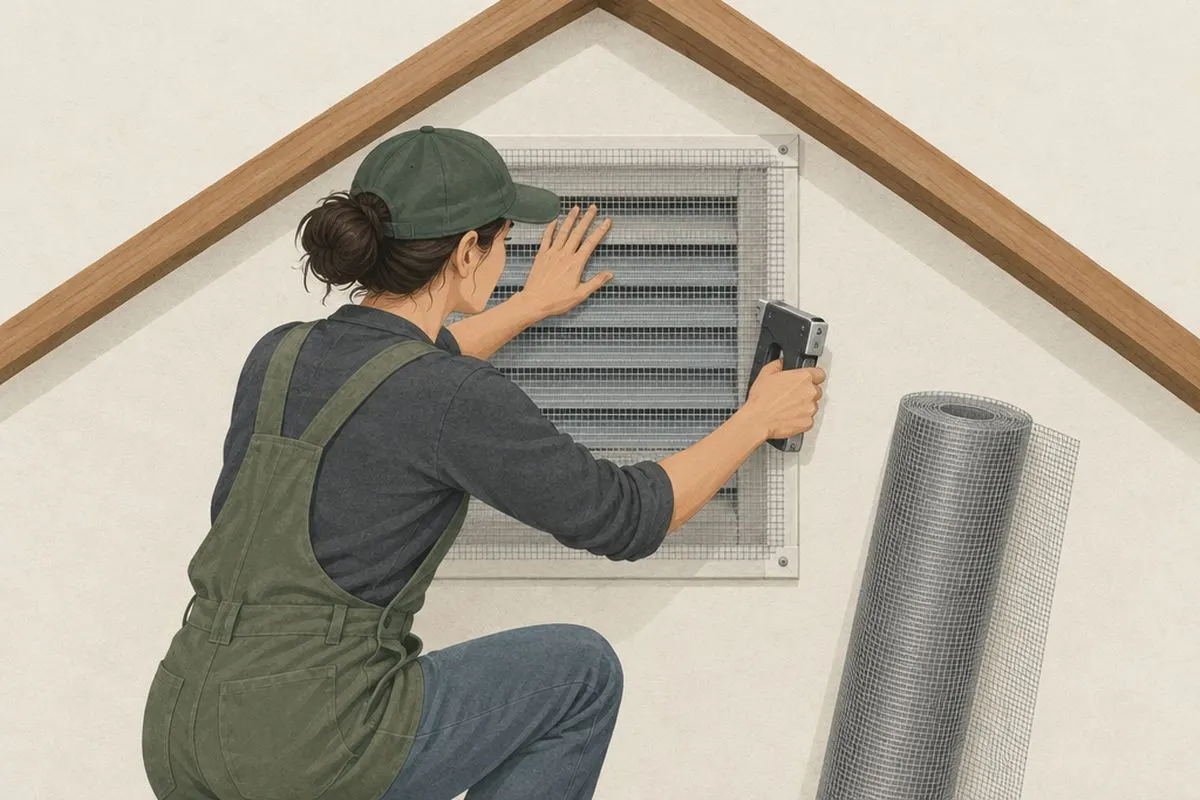
1/8 in Stainless Steel Ember Mesh
A roll of 1/8 in (3 mm) stainless mesh stapled or screwed over existing vents is the recommended retrofit when replacement isn't practical. Also use it to close gaps under decks and at the base of siding.
 Illustration
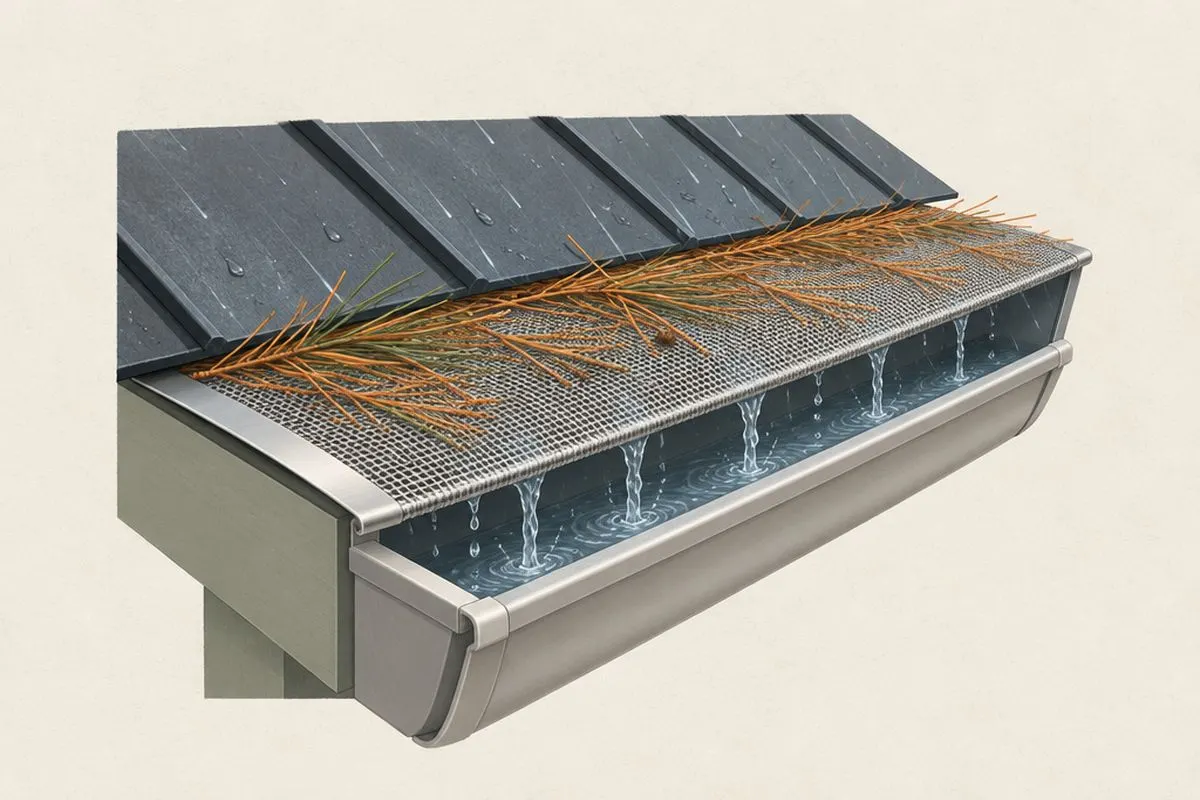
Stainless Micro-Mesh Gutter Guard
Stainless micro-mesh on an aluminum frame blocks pine needles and seeds while letting water through. Non-combustible by design, which is the whole point in a wildfire zone.
Then houses set fire to each other
This is the part that gets least attention and may matter most.
A burning house is an enormous source of radiant heat and a factory for new embers. Once one goes up, its neighbours are exposed to something far more intense than the forest ever produced. The Camp Fire study found that the strongest single predictor of whether a house survived was its distance from the nearest destroyed structure. Homes within 18 metres of one survived at 5.8%. Beyond 18 metres, 35.4%.
IBHS investigators found the same pattern from the other direction: spacing under 10 feet posed significant risk, while separation greater than 50 feet posed little. Their Camp Fire report noted buildings destroyed while the vegetation between them remained — the signature of structure-to-structure spread rather than crown fire.
For anyone on a standard suburban lot this is uncomfortable, because you cannot move your house and you cannot control your neighbour's. It is also why the IBHS Wildfire Prepared programme added a neighbourhood standard in 2026, and why community-level schemes like Firewise USA and FireSmart's neighbourhood recognition exist. On a tight lot, your risk is substantially your street's risk.
The things that connect one fire to the next
If structures ignite each other, the question becomes what carries fire across the gap. Research has been unusually specific here.
Fences. A NIST study ran 187 experiments on wood, vinyl and composite fences with various mulches. Fences burning alone went slowly. Fences with mulch at the base let flame run the full length fast. Back-to-back fences — two panels sharing a property line — produced the most intense fires, engulfing 8-foot panels in under four minutes. Even fences separated by three feet still produced dangerous flames. If you have a wooden fence running up to your wall, you have installed a fuse.
Decks. IBHS ember testing found that the danger is less the decking material than what falls through it: embers dropping between boards ignite the debris underneath. Counterintuitively, medium winds produced the greatest ember accumulation on deck surfaces, not the strongest ones. Most plastic composites smouldered rather than flamed, and only two of eight products tested sustained flaming at all.
Mulch. Covered in every guide on this site for the same reason it keeps appearing in the research: it is a continuous, dry, combustible surface that people lay directly against their foundations.
 Illustration
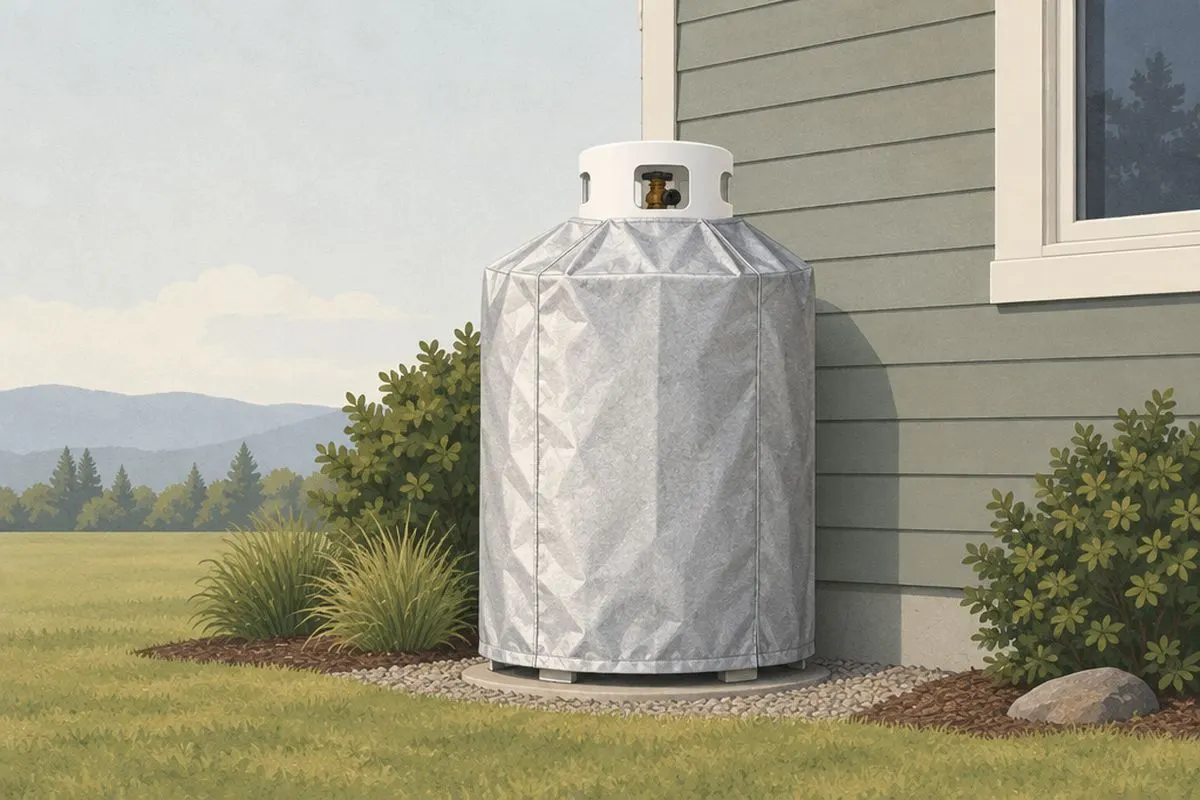
Fire-Resistant Propane Tank Cover
A silica or aluminized cover for BBQ and heating propane cylinders. Tanks venting near a house are a major secondary ignition source; a cover buys time and reduces radiant heat on the tank.
 Illustration
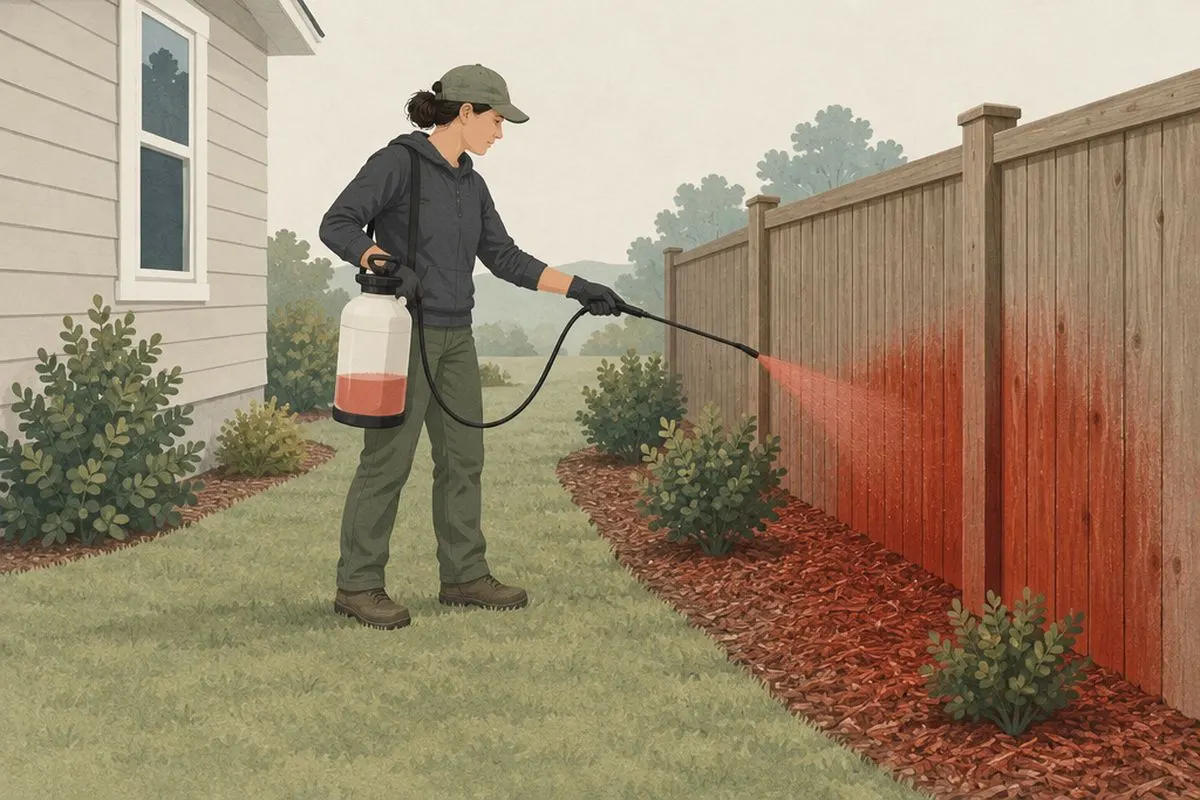
Phos-Chek Wildfire Home Defense
The consumer version of the red retardant dropped from air tankers. Applied days or weeks ahead to fences, decks, mulch and siding; stays effective until rinsed by heavy rain. Dries clear.
What this means for what you buy
If the threat were a wall of flame, the rational purchase would be something heroic — a bigger pump, a thicker wrap. Because the threat is mostly embers and neighbours, the rational purchases are small and boring, and they are cheap.
One-eighth-inch stainless mesh over every vent. Metal gutter guards, or a diarised gutter clean. Gravel instead of bark in the first few metres. A fence section near the house swapped for steel. Nothing on that list costs more than a few hundred dollars, and collectively it addresses the mechanism that actually destroys houses.
The expensive items still earn their place — sprinklers and gel buy you a wetted surface during the hours that matter, and a pump keeps them running when municipal pressure drops. But they are a second layer. A house with open vents and a full gutter is not made safe by a sprinkler kit.
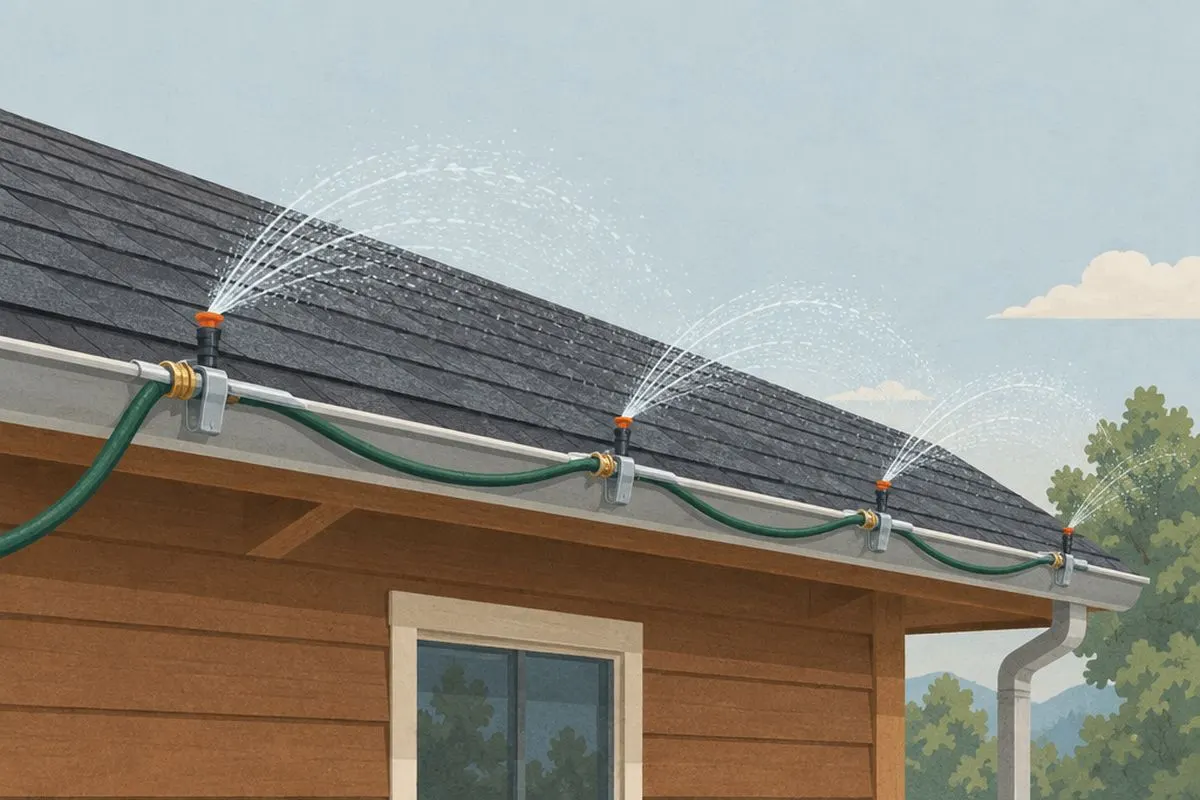 Illustration
WASP Wildfire Protection Full Kit
Canadian-designed gutter-clip sprinkler heads that install in minutes without tools and run off a standard garden hose. The full kit covers a typical roofline and includes hoses and splitters.
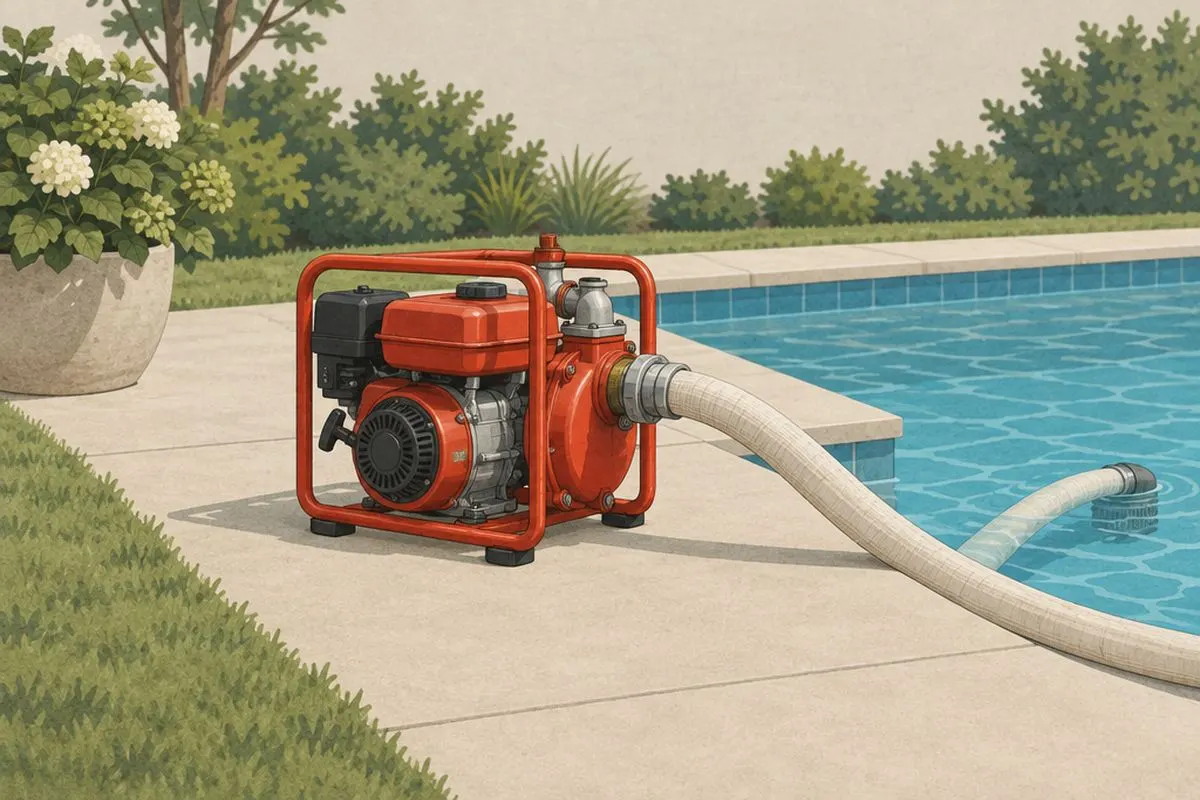 Illustration
Portable Gas Fire Pump (1.5 in)
A high-pressure 1.5 in gas pump moves water from a pool, pond or tank at enough pressure to run a roof sprinkler kit plus a hose line. The Honda-engine models are the reliability benchmark; buy the high-pressure variant, not the trash-pump variant.
The honest limit
None of this makes a house safe in the way a fireproof safe is safe. IBHS's investigation of the Palisades and Eaton fires found that homes with four hardening features — Class A roof, non-combustible siding, double-pane windows, enclosed eaves — had a 54% chance of avoiding damage, against 36% for homes where only one measure had been taken.
Read that number honestly. Doing nearly everything right still left roughly half of those homes damaged in an extreme wind-driven conflagration. Hardening shifts the odds substantially. It does not buy certainty, and anyone selling you certainty is selling something else.
It also does not change the evacuation calculus. Every product on this site is meant to be set up in advance and left to work while you leave early.
Sources
Jack Cohen, 'Wildland-Urban Fire — A Different Approach', USDA Forest Service, and subsequent legislative testimony. Knapp et al., Fire Ecology 17:25 (2021), Camp Fire structure survival. IBHS Camp Fire investigation report and IBHS findings on the Palisades and Eaton fires, released December 2025.
NIST, 'Study Finds Wildfire Hazards in Residential Fences and Mulch Beds', August 2022 (Butler, Johnsson and Maranghides). Quarles and Standohar-Alfano, 'Ignition Potential of Decks Subjected to an Ember Exposure', IBHS. NFPA/IBHS ember communications for the 90% figure, which we have flagged rather than relied on.
Current as of September 2026.