
Retrofitting an Existing House: What's Worth It
Real 2024 costs for every component, the roughly $10,000 bundle that buys the most protection, and an honest admission that nobody has published a proper cost-effectiveness ranking.
Start with the admission
There is no published, rigorous ranking of wildfire retrofits by dollars spent per unit of risk reduced. We looked hard for one. IBHS structures its standard in tiers rather than ranking items. Headwaters Economics has costed components thoroughly but does not rank them by effectiveness. The research that comes closest ranks features by how much they explain about whether homes were lost — which is a different question, and using it as a spending guide would be a mistake.
So anyone presenting you with a confident ordered list of best-value retrofits has made it up. What follows is the best available reasoning from real cost data and real post-fire evidence, presented as reasoning rather than as a ranking.
What things actually cost
These are 2024 figures from Headwaters Economics, the most detailed public costing available. Treat them as planning bands; they have moved since.
Vents: ember-resistant foundation vent $229 each, gable end vent $420 each, metal dryer vent with baffle $68. Roofing: Class A asphalt fibreglass with underlayment $6.29 per square foot — about $6,300 on a 1,000 square foot roof — or $18.68 per square foot for standing seam metal. Windows: $755 to $1,200 for a 2-by-3-foot replacement. Doors: exterior pedestrian $1,250 to $1,500, metal-framed sliding around $2,700, a 16-by-7-foot garage door around $4,300.
Siding in fibre cement: $6.67 per square foot. Enclosing open eaves with soffit: $3.92 to $4.50 per square foot. Metal gutter system with guard: $19 per linear foot. Metal drip edge: $2.93 per linear foot. Metal flashing at deck intersections: $4.14 per linear foot. Decks: $104 per linear foot for a metal grate at the first board, $27 per square foot for a mesh screen enclosure, $11 to $67 per square foot for a fully non-combustible surface.
Whole-house scenarios run from $2,000 to $23,000 for minimal work, $23,000 to $40,000 for moderate, $40,000 to $60,000 for enhanced, and $60,000 to $100,000 and up for premium.
The free tier, which comes first
Headwaters is explicit that the first moves cost nothing: removing flammable material from decks, clearing gutters, and clearing vegetation and debris from the roof are critical maintenance tasks with little or no cost.
Add to that pulling bark mulch away from the foundation, moving the woodpile, clearing under the deck, and taking the doormat and patio cushions inside when a fire is nearby. All free. All addressing the mechanism — ember ignition of fine fuels against the structure — that destroys the most houses.
It is genuinely worth doing this before spending anything, and not only because it is free. A house with screened vents and a gutter full of pine needles has not been hardened; it has been decorated.
 Illustration
McLeod Fire Rake / Hoe
The combination rake-and-hoe wildland crews use to scrape fuel down to mineral soil. Ideal for clearing needle litter, cutting a small control line and smothering spot fires.
 Illustration
5-Gallon Backpack Fire Pump (Indian / Smith-style)
The refillable water backpack every wildland crew carries. Knocks down spot fires on mulch, decks and grass with a directed stream. Fill it from any bucket or tank.
The roughly $10,000 to $15,000 bundle
Headwaters identifies a priority bundle in that range, and it is a sensible list: replace vents with ember-resistant units, install metal flashing at deck-to-wall intersections, fit metal gutters with guards and keep them clear, and replace bark mulch with non-combustible gravel.
What unites those four is that each closes a specific, documented ignition pathway rather than improving general robustness. Vents let embers into the attic and crawlspace. The deck-to-wall junction collects debris where a horizontal surface meets a vertical one. Gutters hold a tray of dry needles at the roof edge. Mulch is a continuous combustible surface against the foundation.
For most existing houses this is where we would spend first after the free work, and on a typical bungalow you can do the vents and mesh yourself for a few hundred dollars if you are comfortable on a ladder.
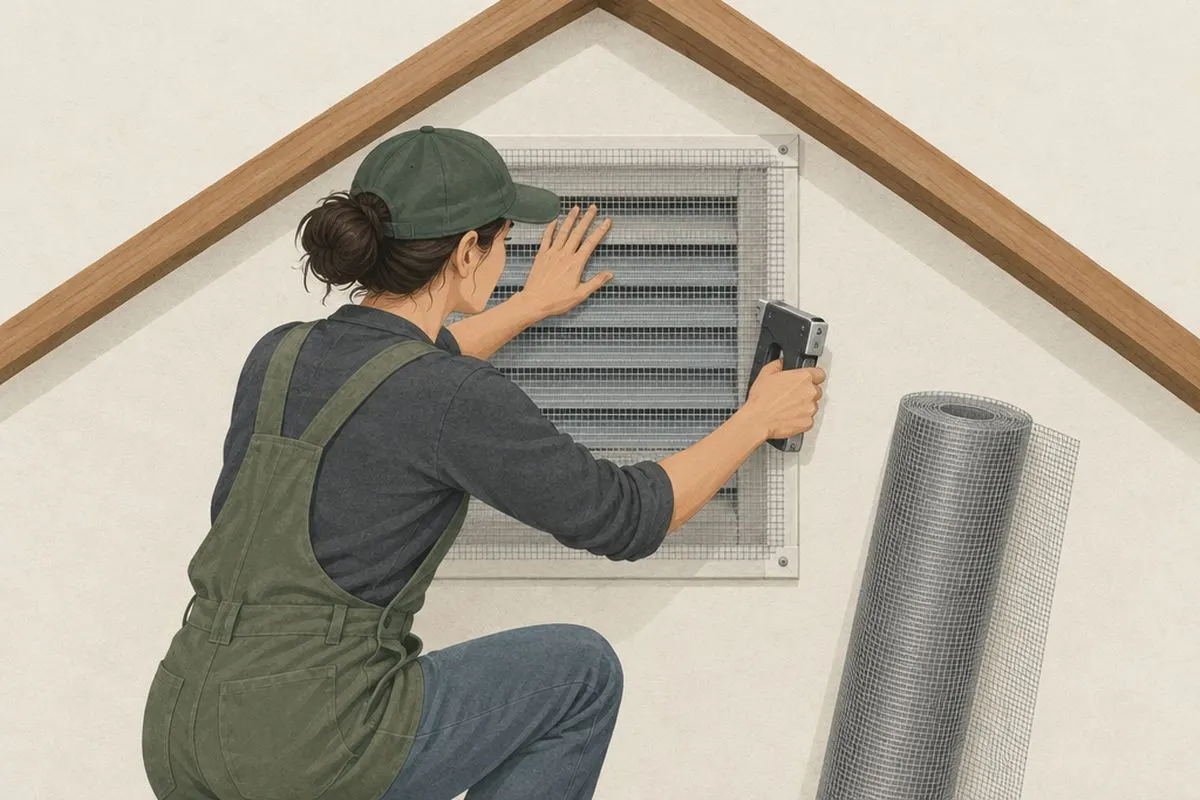 Illustration
1/8 in Stainless Steel Ember Mesh
A roll of 1/8 in (3 mm) stainless mesh stapled or screwed over existing vents is the recommended retrofit when replacement isn't practical. Also use it to close gaps under decks and at the base of siding.
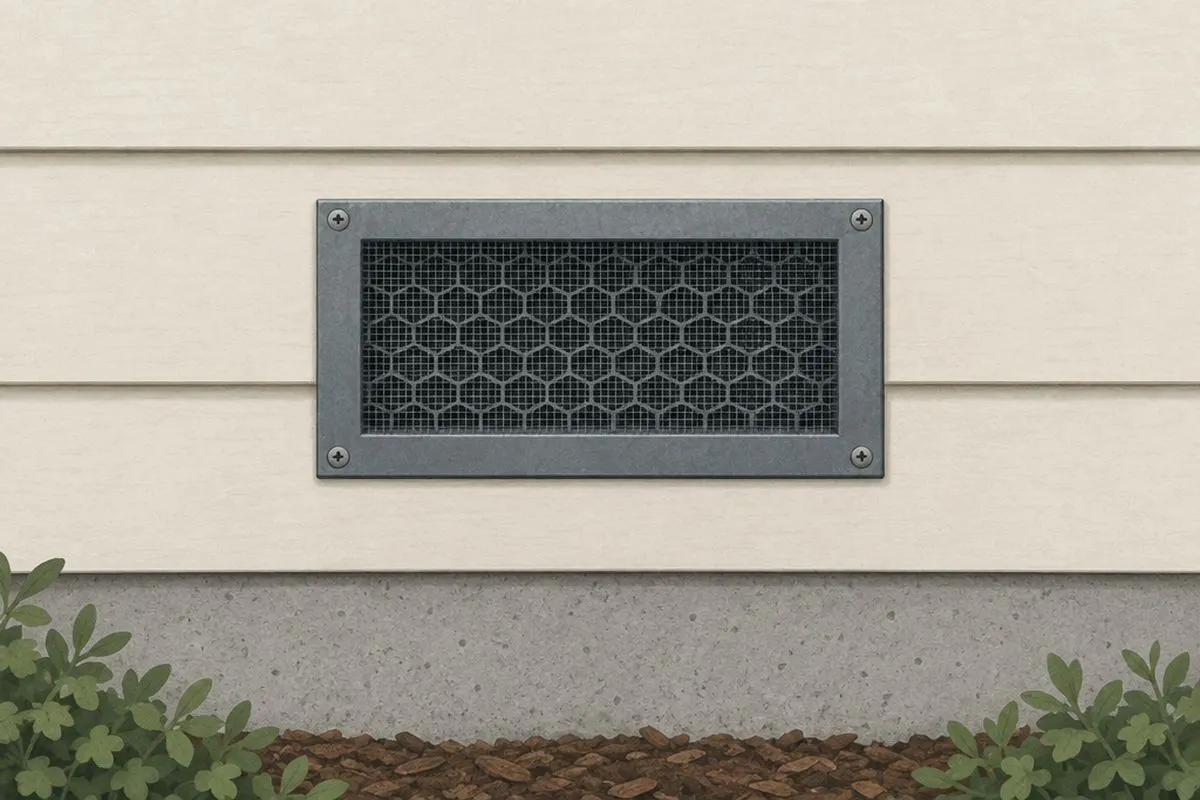 Illustration
Vulcan Ember-Resistant Vents
WUI-listed vents with an intumescent honeycomb that expands and seals at roughly 350°F, plus 1/8 in mesh. Available in soffit, gable, foundation and dormer formats in standard sizes.
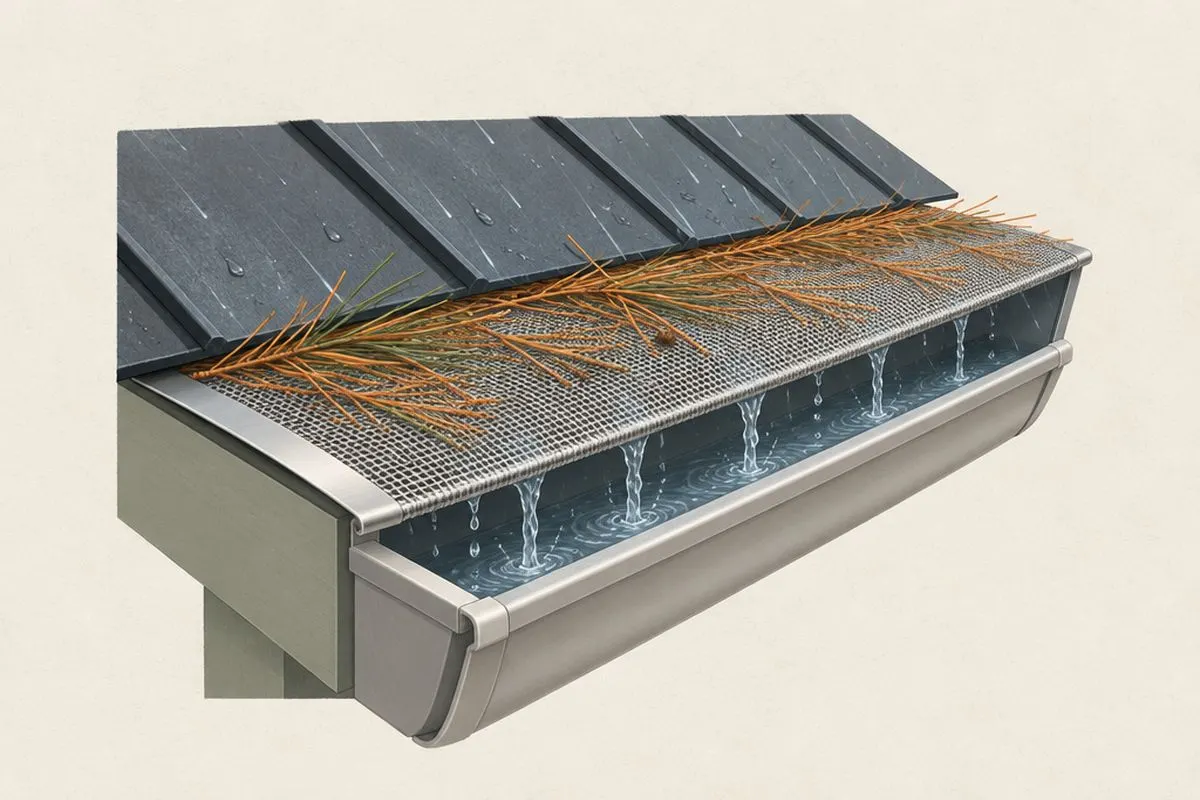 Illustration
Stainless Micro-Mesh Gutter Guard
Stainless micro-mesh on an aluminum frame blocks pine needles and seeds while letting water through. Non-combustible by design, which is the whole point in a wildfire zone.
What the loss data points at
Across five years of Californian fires, the structural features that best explained whether homes were lost ranked in this order: eaves, then window panes, then vent screens, then siding, then deck and porch material, then roof type.
That is explanatory power, not value for money — eaves top the list partly because open eaves were common enough to produce variation. But it is a useful corrective to intuition, because almost nobody thinks about their eaves and almost everybody thinks about their roof.
Open eaves trap rising hot air and embers against the underside of the roof. Enclosing them with soffit runs $3.92 to $4.50 per square foot, which on a typical house is a few thousand dollars, and it is one of the higher-value envelope upgrades available on an existing building.
Windows are the other one the evidence keeps pointing at, and the 2025 testing was emphatic: a tempered back pane roughly doubles the heat load a window survives. Full window replacement is expensive, so this is the classic natural-replacement item — when a window is due anyway, specify multi-pane with at least one tempered pane.
Time the expensive items to the replacement cycle
The difference between a wildfire-resistant new house and a standard one is small. The difference between retrofitting those features and not is large. The way to capture the first number on an existing house is to wait for the moment you were going to spend the money anyway.
When the roof is due, specify a Class A assembly and check the underlayment. When the siding is due, go fibre cement, and at minimum make the bottom six inches non-combustible. When the deck is rotting, rebuild it with a non-combustible surface and screen underneath. When windows fail, specify tempered.
Doing those four things on schedule over fifteen years gets you most of the way to the IBHS Enhanced tier at close to no incremental cost. Doing them all next spring costs $40,000 to $60,000.
The exception is if you are in an area where insurers are actively repricing or withdrawing. In that case the calculus changes, because the retrofit is buying insurability rather than paying for itself in discounts — the discounts, as we cover in the insurance guide, are trivially small.
What we would not spend on first
Permanently installed sprinkler systems, structure wrap and bulk gel are all real products that work, and they all sit further down the list than their price suggests. They are active measures: they need water, or power, or a person, or all three, and they need you to have time. The hardening items above work whether or not anyone is home and whether or not the hydrants hold pressure.
That is not an argument against them — a pump and tank is the right purchase for a rural property with real exposure, and we say so elsewhere. It is an argument about order. Spend on the passive items until they are done, then buy the active ones.
The genuinely bad buy is anything sold as fireproofing a house that leaves the vents open and the gutters full.
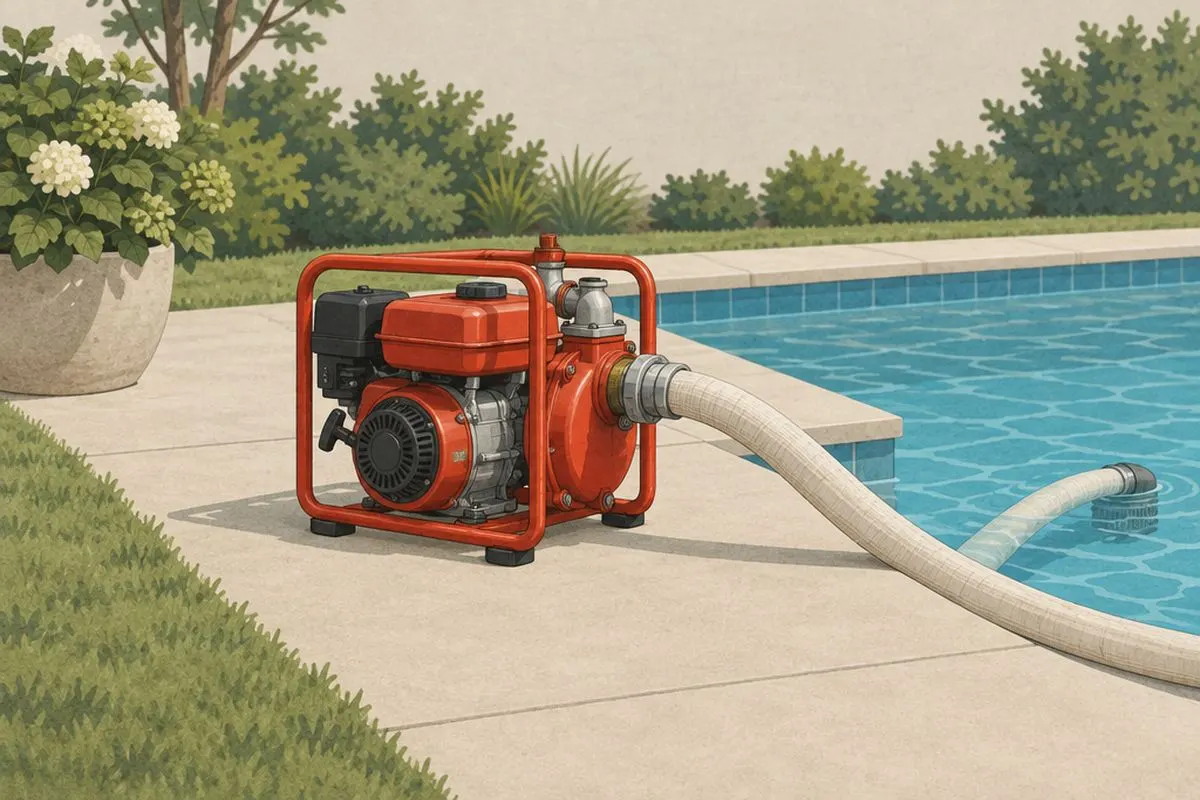 Illustration
Portable Gas Fire Pump (1.5 in)
A high-pressure 1.5 in gas pump moves water from a pool, pond or tank at enough pressure to run a roof sprinkler kit plus a hose line. The Honda-engine models are the reliability benchmark; buy the high-pressure variant, not the trash-pump variant.
 Illustration
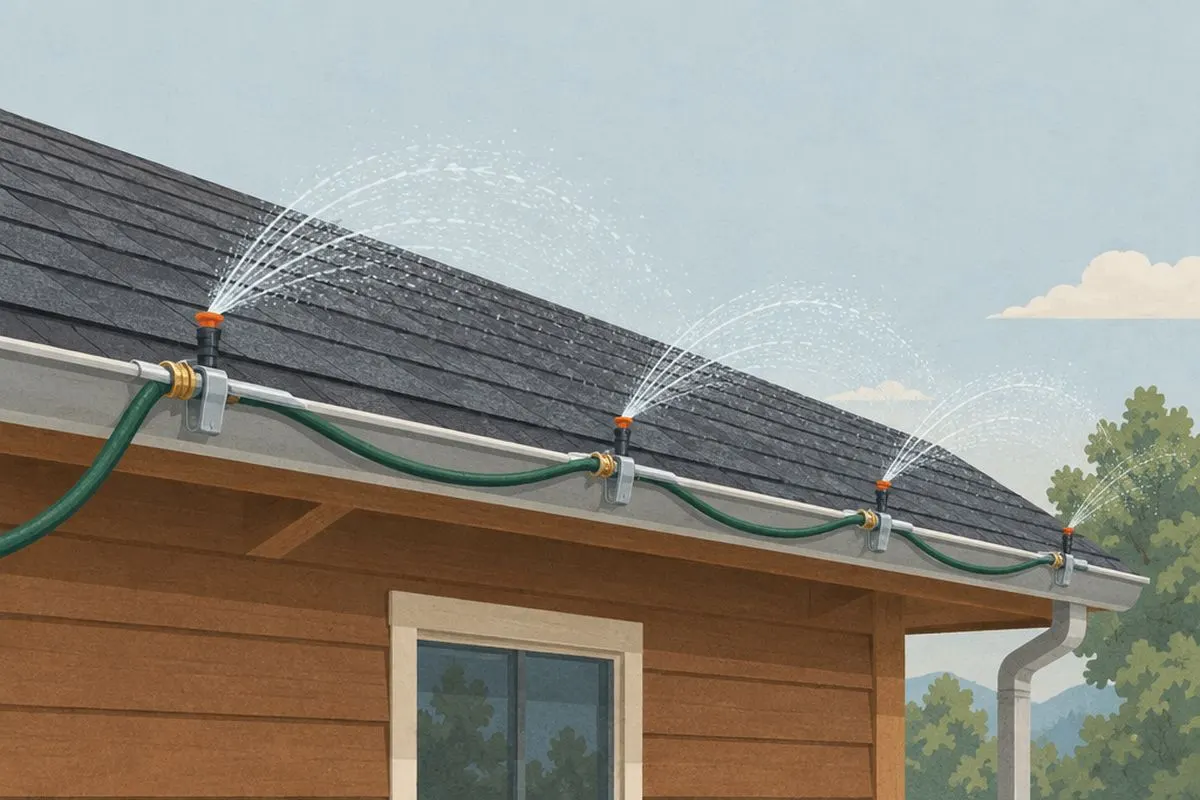
WASP Wildfire Protection Full Kit
Canadian-designed gutter-clip sprinkler heads that install in minutes without tools and run off a standard garden hose. The full kit covers a typical roofline and includes hoses and splitters.
Sources
Headwaters Economics, 'Retrofitting a Home for Wildfire Resistance: Costs and Considerations', June 2024 — all component costs and the priority bundle. Syphard and Keeley, Fire 2(3):49, 2019, for the ordering of structural features by explanatory power. Willi, Gorham and Horn, Fire Technology 61(4), 2025, on window pane failure. IBHS Wildfire Prepared Home Technical Standard and Suburban Wildfire Adaptation Roadmaps.
Costs are 2024 US dollars and have not been adjusted. Current as of September 2026.