
Escape Planning & Egress
Two ways out of every room, practised once, in the dark.
Modern furnishings burn faster than the ones the old escape-time research was based on, which is why the advice has moved from 'get out' to 'get out quickly, and know how before it happens'. The equipment here is minimal — an escape ladder for a second storey, a torch where you can find it — and the thing that matters most is free: a plan everyone in the house has actually walked through, including whoever cannot get themselves out.
Our picks
1 guide · price bands $ to $$$$
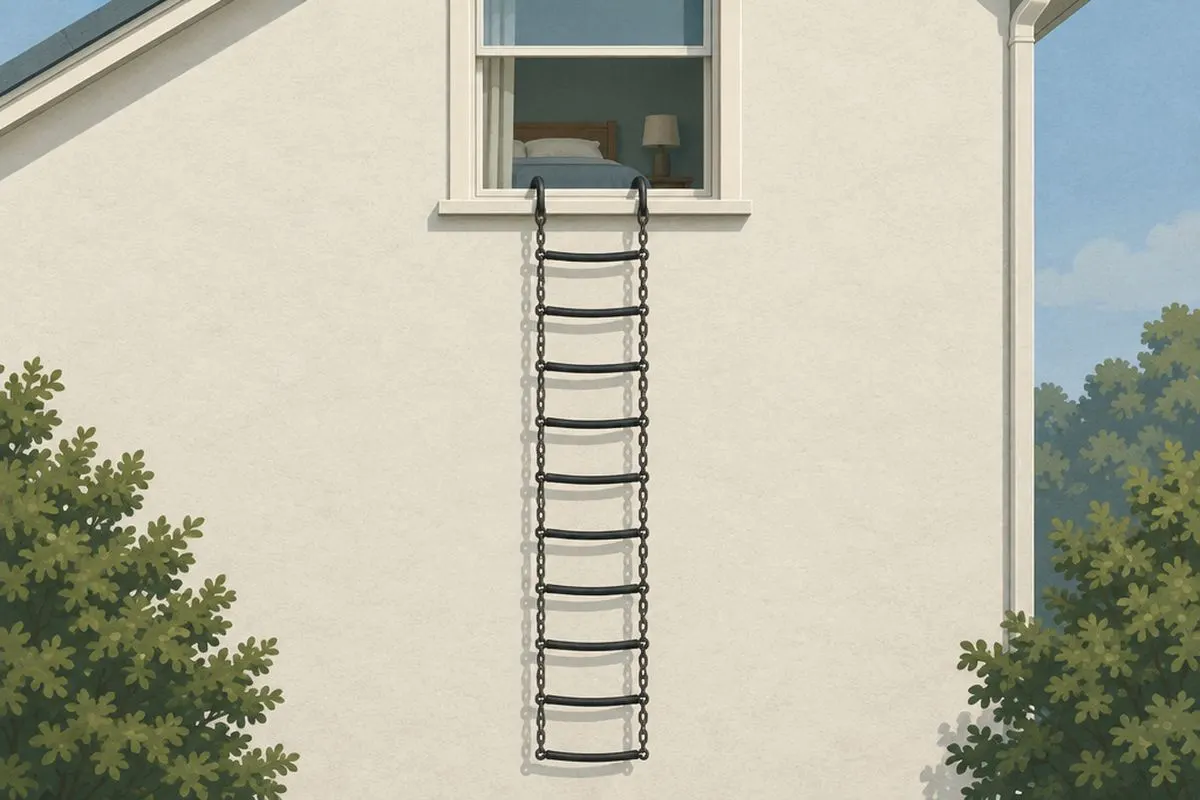
Before you buy
- Escape ladders are the one real purchase. Buy one per upstairs bedroom, not one for the house, and check it reaches the ground from that window.
- Practise it once with the ladder actually deployed. Almost nobody does, and an unpractised ladder at 2 a.m. in smoke is close to useless.
- Agree a meeting point outside and make it specific — a particular tree or the neighbour's driveway, not 'out front'. The counting happens there, and nobody goes back in.
- Plan for whoever needs help: small children, anyone with mobility limits, and pets. Assign a person, and have a backup for when that person is away.
- Sleep with bedroom doors closed. A closed door meaningfully slows fire and smoke spread, and it is the single most effective free thing in this category.