
Ember-Resistant Vents
Most homes are lost to embers that get inside — not to flames.
Wind-driven embers can travel over a kilometre ahead of the fire front and enter through attic, soffit, gable, foundation and dryer vents. Ember-resistant vents use fine metal mesh (1/8 in / 3 mm or smaller), baffles, or intumescent coatings that expand and seal at high temperatures. Replacing vents is one of the highest-return hardening jobs you can do for a few hundred dollars.
Our picks
3 guides · price bands $ to $$$$
 Illustration
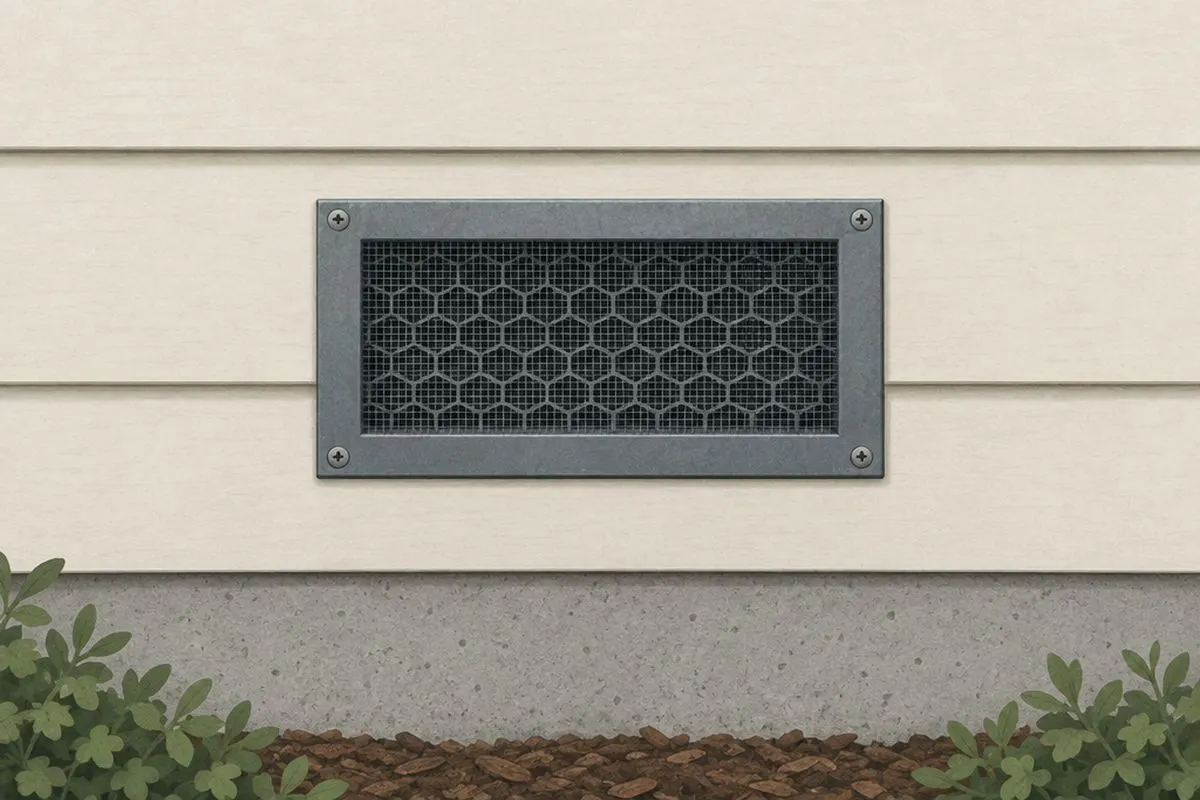
Vulcan Ember-Resistant Vents
WUI-listed vents with an intumescent honeycomb that expands and seals at roughly 350°F, plus 1/8 in mesh. Available in soffit, gable, foundation and dormer formats in standard sizes.
 Illustration
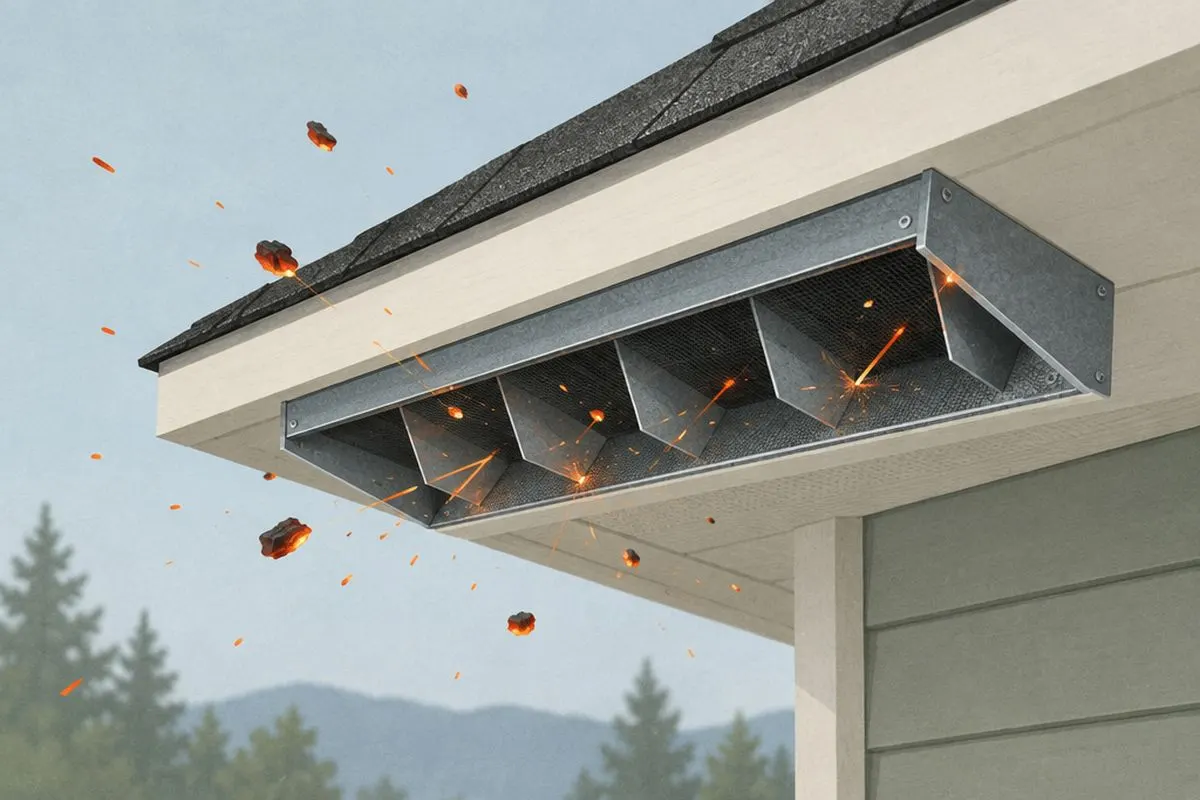
Brandguard Ember & Flame Vents
Uses a patented baffle design to stop embers without relying on fine mesh that clogs. Good airflow numbers and a wide catalogue of eave, gable and foundation models.
 Illustration
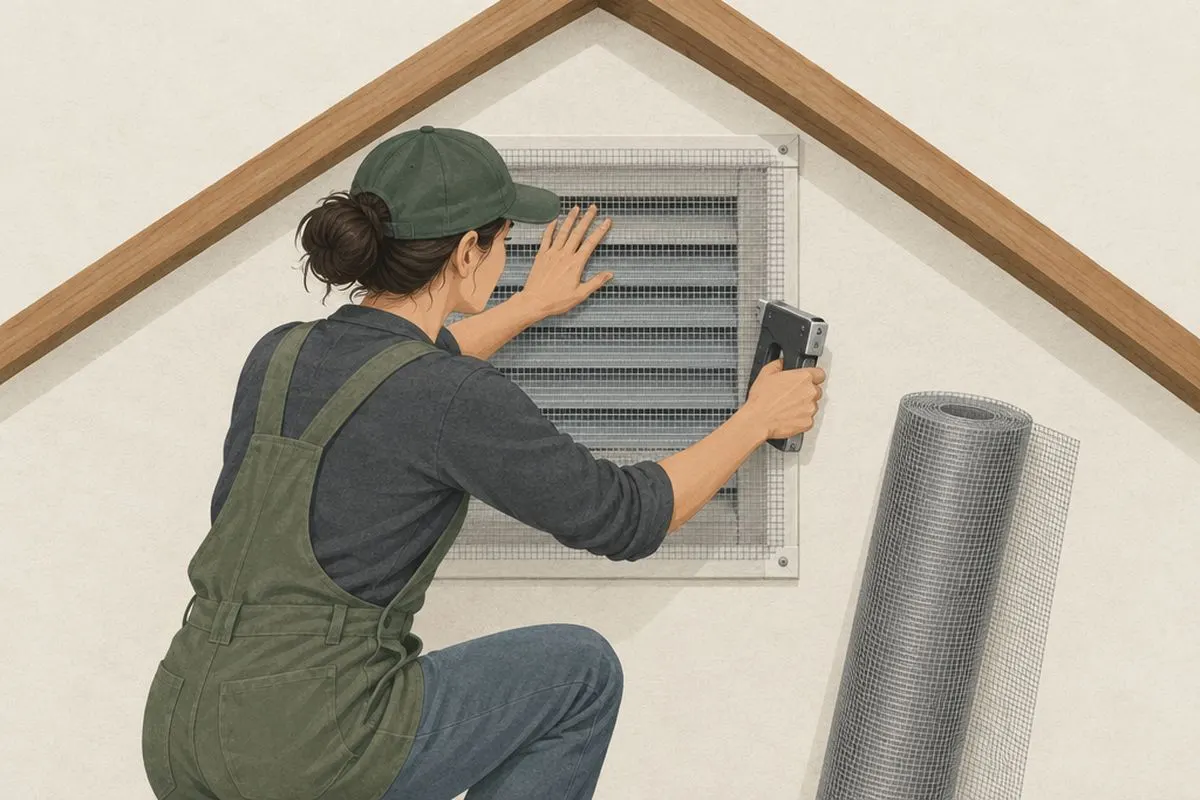
1/8 in Stainless Steel Ember Mesh
A roll of 1/8 in (3 mm) stainless mesh stapled or screwed over existing vents is the recommended retrofit when replacement isn't practical. Also use it to close gaps under decks and at the base of siding.
Before you buy
- Look for WUI-listed (California Wildland-Urban Interface, ASTM E2886) products. That listing is the benchmark everywhere, including Canada.
- Mesh size is critical: 1/8 in (3 mm) blocks embers while still allowing airflow. 1/16 in (1.6 mm) clogs with debris and is discouraged.
- Measure every existing vent opening before ordering — sizes vary by builder and era.
- Don't forget the dryer vent, the range hood exhaust and any gable-end louvres.
- If replacement isn't possible, stainless 1/8 in mesh screening retrofitted over existing vents is the budget alternative.