Reader-supported. Some links are affiliate links — see our disclosure. Evacuate when ordered; no product replaces leaving early.
Best long-term retardant

Phos-Chek Wildfire Home Defense

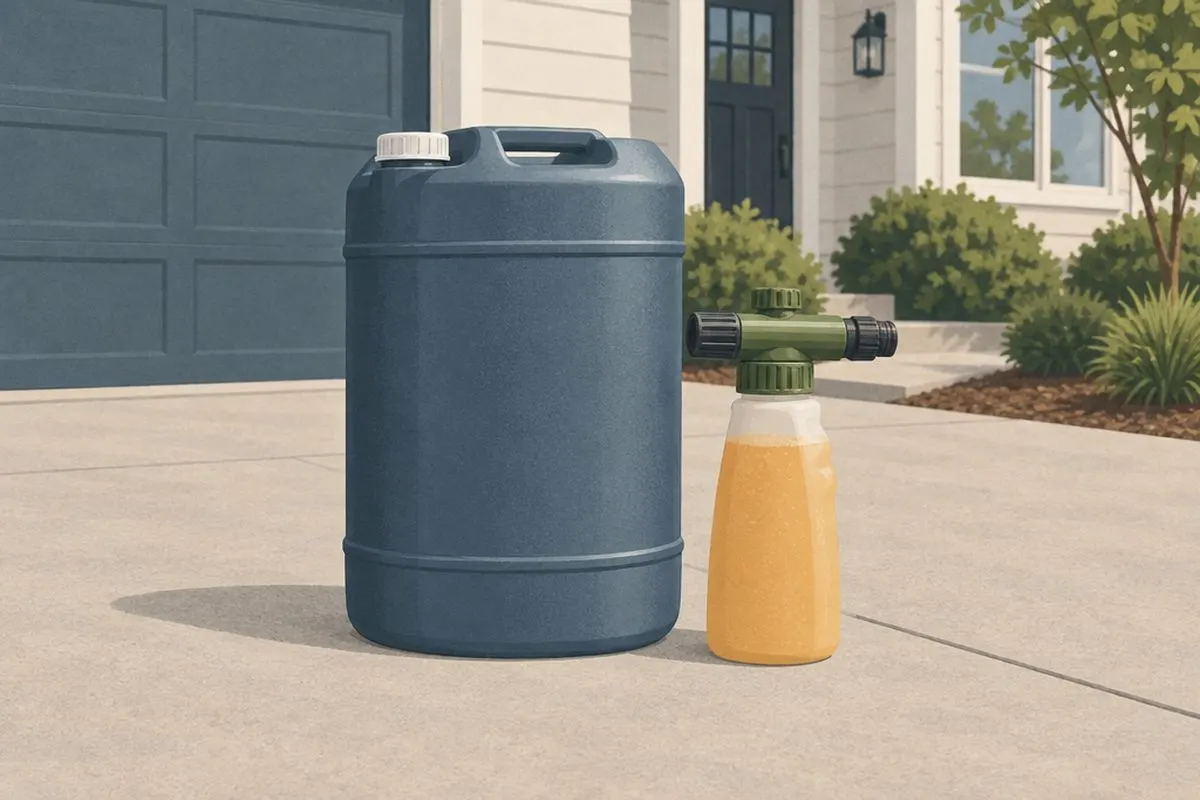
Perimeter Solutions United States & Canada $$ · 1-gal concentrate with hose-end sprayer

The consumer version of the red retardant dropped from air tankers. Applied days or weeks ahead to fences, decks, mulch and siding; stays effective until rinsed by heavy rain. Dries clear.

Why we like it

  • Apply early — no last-minute scramble
  • Same chemistry as aerial retardant
  • Dries clear on most surfaces

Watch out for

  • Washes off in rain
  • Covers surfaces, not the whole structure
Best for

Seasonal treatment of fences, wood decks and mulch beds.
Read the full market guide — costs, install effort and alternatives ↓
Market guide

The whole commitment, end to end

What this actually is, what the market looks like, what it really costs, and how much of your time it wants — before you spend anything.

Buying it Easy
Installing it Easy
Living with it Moderate
Up front

CAD $120–$350 / USD $90–$280 for a homeowner kit covering roughly 200–500 m² of surface, depending on absorbency.

Lead time

Usually in stock spring and early summer; sells out during active fire seasons

Time to install

2–4 hours for a typical property, plus mixing

How it works

A long-term retardant concentrate you mix with water and spray on fences, decks, mulch beds, sheds and the wooden things around the house. Unlike gel, it does not depend on staying wet: the salts stay on the surface after the water evaporates and chemically interfere with combustion for weeks or months, until heavy rain washes them off. You apply it early in the season, not at the last minute.

What the market looks like

Consumer long-term retardant is a young category dominated by one name — Phos-Chek, the same Perimeter Solutions chemistry dropped from air tankers, repackaged for homeowners. Competitors are mostly regional resellers of similar ammonium-phosphate formulations, plus a fringe of unregistered products that are essentially fertiliser with dye. The meaningful buying signal is regulatory: in the US, look for a product on the USDA Forest Service qualified products list; in Canada, check the PMRA registration or the manufacturer's Canadian SDS. Anything sold as 'fire retardant' with no registration number is a bottle of salt water.

Features that actually matter

Long-term protection
Stays effective after drying — typically until roughly 25–50 mm of cumulative rain has fallen. One spring application often covers most of a dry season.
Concentrate
Sold as powder or liquid concentrate, mixed at the labelled ratio in a pump sprayer or hose-end applicator.
Coloured or uncoloured
The uncoloured version is far more sensible on a house. The coloured version exists so aerial crews can see coverage, and it will stain.
Broad substrate compatibility
Wood, mulch, vegetation, fencing. Not for glass, vehicles or anything you want to keep clean.

What it really costs

Up front
CAD $120–$350 / USD $90–$280 for a homeowner kit covering roughly 200–500 m² of surface, depending on absorbency.
Consumables
The retardant itself is the consumable. Budget one full application per season, twice if you get a wet June.
What else you'll need
A 15–20 L backpack or wheeled pump sprayer, CAD $80–$250, if you do not already own one. Gloves and eye protection.
Over five years
CAD $600–$1,800 for a house that reapplies annually. This is a subscription, not a purchase — plan for it.

Figures are typical street prices in Canadian and US dollars as of September 2026, gathered from public retail listings. They move with the season and with the exchange rate — treat them as a planning band, not a quote.

How it differs from the alternatives

Versus gel
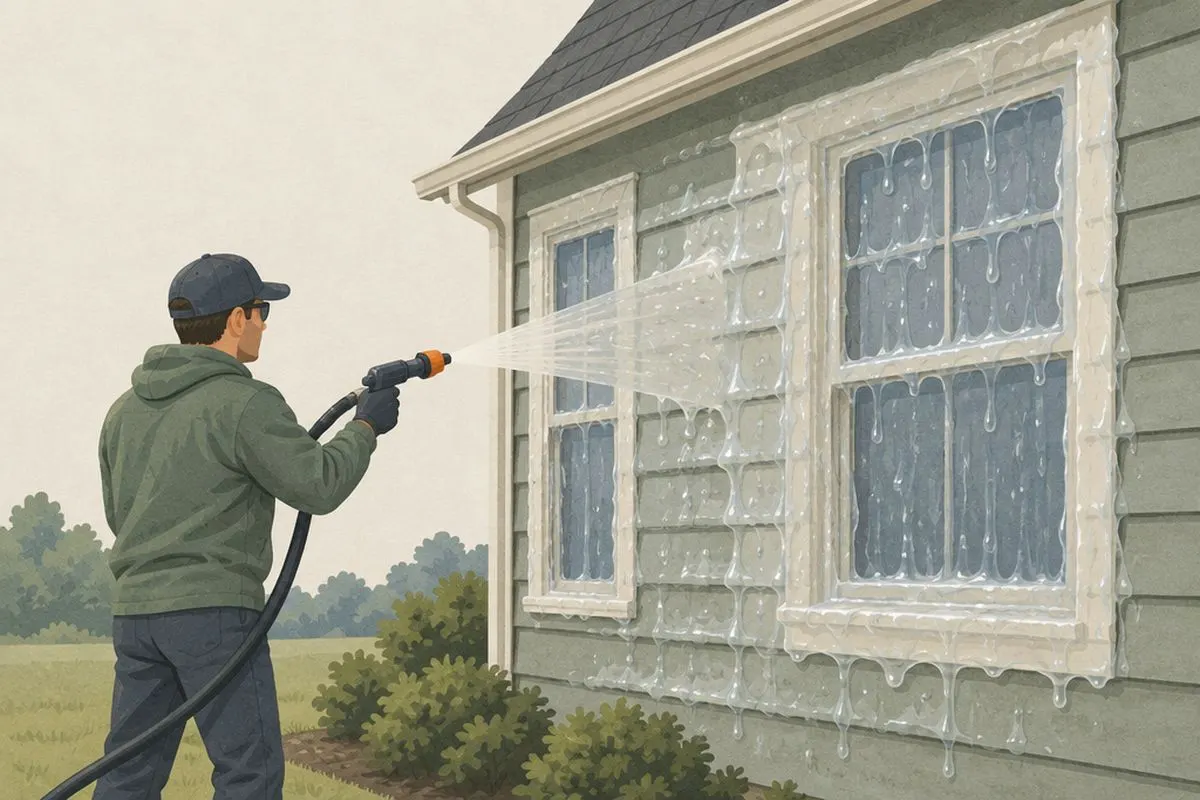
The fundamental split in this category. Retardant is applied weeks ahead and keeps working dry. Gel is applied in the last hour and only works while it is wet. They are complementary, not competing — retardant on the fence in May, gel on the wall in August.
Versus doing nothing to the fence
A wooden fence that runs up to the house is one of the most reliable ways to deliver fire to a wall. Treating it is high-value. Replacing the last 2 m with metal is better and permanent.
The staining question
Even uncoloured product can leave a faint residue on cedar and light stone. Test a patch. Assume you will be pressure-washing something afterwards.
Environmental note
Ammonium-phosphate retardants are hard on fish. Do not spray near a creek, pond or storm drain, and keep it out of the ditch.
01

Buying it

Effort Easy

Where: Direct from Perimeter Solutions' consumer channel, Amazon in both countries, and Canadian wildfire equipment suppliers. Some rural fire departments run bulk-buy programs — worth a phone call.

Lead time: Usually in stock spring and early summer; sells out during active fire seasons

Check the label for a registration number before you pay. This category attracts imitators.

02

Installing it

Effort Easy

Time: 2–4 hours for a typical property, plus mixing

You'll need: Backpack or wheeled pump sprayer · Gloves · Eye protection · Measuring jug · Tarp for masking

Do it on a calm, dry day with 24 hours of no rain forecast. Mask anything you care about — windows, siding, vehicles, the neighbour's car. Work top-down and do not skimp on the fence sections nearest the house, which are the ones that matter.

03

Living with it

Effort Moderate

Reapply after heavy rain and at least once a year. Diarise it for the first dry week of spring. Store the concentrate dry and above freezing.

If not this, then what

  • Barricade or Thermo-GelDifferent job — last-hour wet protection, not season-long dry protection.
  • Replacing the last 2 m of wooden fence with steelCAD $200–$600 and permanent. Do this as well, and it removes the reason to spray that section at all.
Our verdict

The highest-value chemical purchase for most properties, because it treats the fences, decks and mulch that actually carry fire to the wall. Just understand you are signing up for an annual chore, not buying a thing once.

We don't take payment for placement and we don't sell these products. If you think we've got something wrong here, tell us — we'll correct it.