Independent and reader-supported. Some links are affiliate links — see our disclosure. Codes vary by province, state and city: confirm with your local fire authority.
The rural water supply answer

Dry Hydrant Assembly (6 in)

Various / custom fabrication Canada & United States $$ · Materials; excavation and road work extra

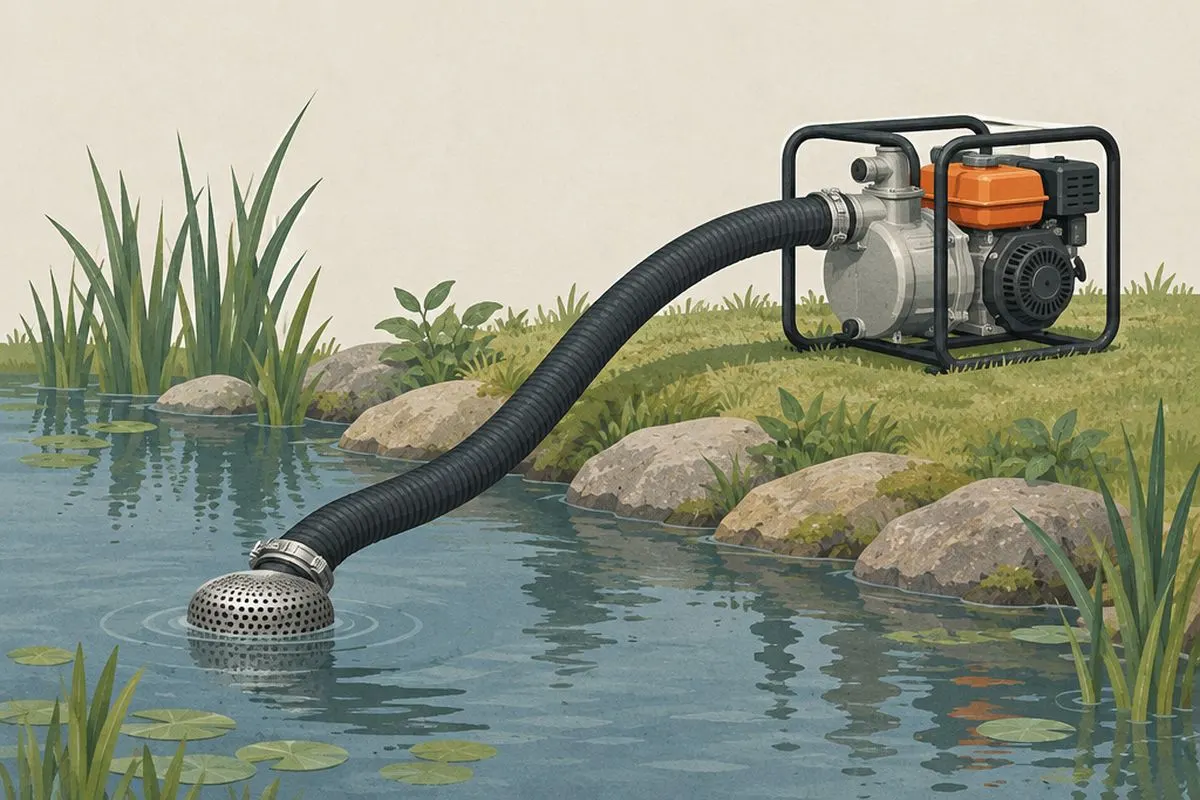
A fixed pipe from a pond, stream or buried cistern to a roadside connection a fire engine can draft from. No water sits in it — the pump pulls a vacuum and atmospheric pressure pushes the water up.

Why we like it

  • Turns a pond you already own into a usable fire supply
  • Can improve how your whole area is graded for insurance
  • No moving parts and no power required

Watch out for

  • Physics caps it: lift much over 12 ft and the design stops working
  • Needs fire department approval, permits, and machinery to install
Best for

Rural properties with a pond, creek or cistern and no hydrant on the road.
Read the full market guide — costs, install effort and alternatives ↓
Market guide

The whole commitment, end to end

What this actually is, what the market looks like, what it really costs, and how much of your time it wants — before you spend anything.

Buying it Hard
Installing it Major project
Living with it Moderate
Up front

Materials and a simple install run low four figures; realistic project costs climb quickly with excavation, long pipe runs, road widening or a turnaround.

Lead time

Weeks to a season, driven by permits and contractor availability

Time to install

Days on site, longer with access work

How it works

A strainer sits submerged in the water source. Schedule 40 pipe — typically 6 inch — runs from it, underground and below frost, to a standpipe at the roadside fitted with a fire-thread connection and a cap. When a pumper connects and evacuates the air, atmospheric pressure drives water up the pipe. There is nothing to fail because there is nothing that moves.

What the market looks like

This is not a retail product. It is a small civil works project, usually fabricated from standard PVC and fittings by an excavation contractor working to a design the fire department and sometimes a conservation district have approved. There are specialist suppliers of strainers, adapters and pre-made heads, but the assembly is site-specific. The useful cost reference point is a USDA-NRCS scenario from 2014 putting a 200 ft, 6 inch PVC install at about USD $3,000 all in — old money, cooperative conditions, and no road work.

Features that actually matter

Lift, not diameter, is the constraint
A pumper achieves roughly 22 ft of lift at best. NFPA 1142 advises designing for no more than 10 to 12 ft, and notes plainly that this loss cannot be overcome by enlarging the pipe.
6 inch pipe, minimum bends
NFPA 1142 requires a design flow of 1,000 gpm at draft. Six inch is the practical standard out to about 100 ft of run; longer runs need 8 inch. Every 90-degree elbow costs you flow — use 45s where you can.
Strainer sizing
Open area at least four times the pipe's cross-section, holes no larger than 3/8 inch, corrosion-resistant throughout.
Submergence
At least 2 ft of water above the strainer and 1 ft below it, measured against the 50-year drought level — not against how the pond looks in May.
Fire thread connection
Must match the responding department's hard suction and conform to NFPA 1963. Ask them what they carry before anything is ordered.

What it really costs

Up front
Materials and a simple install run low four figures; realistic project costs climb quickly with excavation, long pipe runs, road widening or a turnaround.
Consumables
None.
What else you'll need
All-weather access road and a place for a loaded pumper to turn. This is frequently the largest line in the budget and the one people forget.
Over five years
Inspection and annual flow testing. The assembly itself should outlast you.

Figures are typical street prices in Canadian and US dollars as of September 2026, gathered from public retail listings. They move with the season and with the exchange rate — treat them as a planning band, not a quote.

How it differs from the alternatives

Versus a water tank for a pump
A tank serves your own sprinklers; a dry hydrant serves the fire department's pumper, at far higher flow. If you have a pond, the hydrant is usually the better value. Ideally you have both.
Versus doing nothing
In Canada, Fire Underwriters Survey treats dry hydrants with suction points as equivalent to standard hydrants for grading, and properties within 300 m may qualify for better dwelling grades. In the US, ISO can credit a suction point delivering 250 gpm for two hours, and properties within 1,000 ft can be graded better than Class 9.
The volume test
Pumpable volume is not pond volume. It runs from the lowest foreseeable water level to the top of the strainer. NRCS wants 30,000 gallons pumpable or 250 gpm for two hours. A quarter-acre pond that drops three feet in August may have almost nothing usable in the month you need it.
It is a community asset
Its biggest effect on your premium may come through getting your department accredited for tanker shuttle service, which benefits every house on the road, not only yours.
01

Buying it

Effort Hard

Where: Your fire department first, then an excavation contractor. In the US, NRCS and state forestry programmes may cost-share; note most grant programmes fund departments rather than landowners, with you granting access.

Lead time: Weeks to a season, driven by permits and contractor availability

Start with the fire chief, not a supplier. They approve the design, they specify the thread, and they will do the acceptance test. We found no Canadian equivalent to the US state-forestry grant programmes — ask your regional district.

02

Installing it

Effort Major project

Time: Days on site, longer with access work

You'll need: Excavator · Pipe-laying equipment · Not a homeowner job

Permits before construction, potentially from several agencies. Set the intake at least 2 ft below the lowest water level and 2 ft below frost depth, whichever is deeper. Mound soil or use a foam collar on the riser where the high-water line reaches frost depth.

03

Living with it

Effort Moderate

NFPA 1142 asks for quarterly inspection and an annual flow test with a pump. Backflush before testing, keep 3 ft clear around the hydrant, keep vegetation down, and keep reflective signage legible. If the source turns out to be marginal, sign it as inadequate — a mismarked source is worse than an unmarked one.

If not this, then what

  • Buried cistern with a suction connectionWhere there is no pond. Same connection, a known and constant volume, higher cost.
  • Getting your fire department accreditedSuperior Tanker Shuttle Service accreditation in Canada can move premiums for a whole community. Often the highest-leverage thing a rural owner can push for.
Our verdict

On a rural property with water on it, this is probably the single highest-value fire spend available — and one of very few that helps your neighbours too. Start the conversation with your fire chief; the design constraints are theirs, not a catalogue's.

We don't take payment for placement and we don't sell these products. If you think we've got something wrong here, tell us — we'll correct it.