Independent and reader-supported. Some links are affiliate links — see our disclosure. Codes vary by province, state and city: confirm with your local fire authority.
Useful — but not a fire hydrant

Frost-Free Yard Hydrant

Merrill / Woodford / Various Canada & United States $ · Bury depth drives the price

A standpipe with its valve below the frost line that drains after each use, giving year-round outdoor water well away from the house. Genuinely handy. Not, despite the name, firefighting infrastructure.

Why we like it

  • Water at the far end of the property in January
  • No hose to drag from the house to wet down a spot fire or fill a backpack pump
  • Cheap and long-lived

Watch out for

  • Flow is 5-20 gpm — one to two percent of a creditable fire flow
  • Can create a backflow risk on a potable well system if installed wrongly
Best for

Rural and acreage properties wanting outdoor water year-round, for chores and for small ember work.
Read the full market guide — costs, install effort and alternatives ↓
Market guide

The whole commitment, end to end

What this actually is, what the market looks like, what it really costs, and how much of your time it wants — before you spend anything.

Buying it Trivial
Installing it Moderate
Living with it Trivial
Up front

CAD $120-$400 for the hydrant.

Lead time

Days

Time to install

A day including trenching

How it works

The valve sits at the bottom of a buried standpipe, below frost depth. Lifting the handle opens it there; closing it also opens a small weep hole that drains the standpipe back into the ground, so there is no water left above frost to freeze. That drain is also the source of the one real safety issue — see below.

What the market looks like

A stable agricultural commodity from Merrill, Woodford, Simmons and others, CAD $120-$400 depending on bury depth. Bury depths are sold from about 1 ft to over 10 ft; the correct one is set by your local frost line and local code, not by preference. Nothing in this market is wildfire-specific and nobody should be charging you a wildfire premium for one.

Features that actually matter

Bury depth
The specification that matters. The valve must sit below the deepest frost penetration for your area and must drain below it too. Get this wrong and the hydrant freezes and splits.
Inlet size
A standard 3/4 inch inlet gives roughly 5-9 gpm at typical pressure. A 1 inch commercial unit gets you 15-20. Neither is a fire flow.
Garden hose thread
It is a hose bib on a pole, not a fire connection. No fire department will couple to it.
Repairable head
Better units let you service the plunger and seals from the top without excavating. Worth paying for, because that is the part that eventually fails.

What it really costs

Up front
CAD $120-$400 for the hydrant.
Consumables
None; a seal kit every several years.
What else you'll need
Trenching and pipe from the supply, which usually exceeds the hydrant's own cost.
Over five years
Minimal. These last decades if the depth is right.

Figures are typical street prices in Canadian and US dollars as of September 2026, gathered from public retail listings. They move with the season and with the exchange rate — treat them as a planning band, not a quote.

How it differs from the alternatives

Versus a dry hydrant
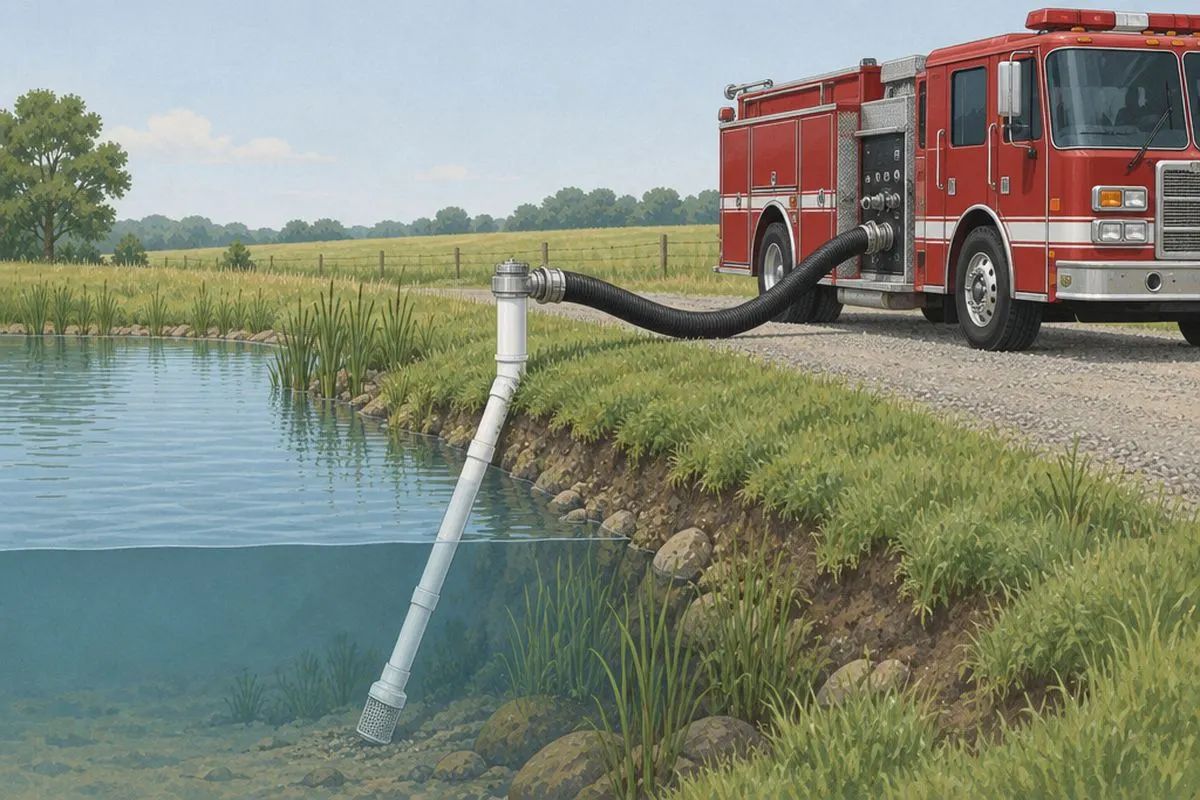
Not comparable, and it matters that people understand why. A dry hydrant is designed for 1,000 gpm at draft; the ISO threshold for a creditable alternative water supply is 250 gpm for two hours; a residential sprinkler system's entire demand is up to about 40 gpm. A yard hydrant delivers 5 to 20. It will not earn insurance credit and should never be signed in any way that suggests it might.
What it is genuinely good for
Filling a backpack pump, wetting a fence line or woodpile, soaking a spot fire after ember fall, topping up a portable tank, and every ordinary outdoor water job at a distance from the house. That is a real list.
The backflow risk
A hydrant that drains into the ground creates a potential cross-connection into a potable well system. Check your local plumbing code and use the specified backflow protection — this is the detail most DIY installs miss.
01

Buying it

Effort Trivial

Where: Farm and ranch supply, plumbing wholesalers, hardware stores, Amazon.

Lead time: Days

Confirm your local frost depth and buy the bury depth that beats it. Buying short is the single most common mistake and the one that cannot be fixed without digging it up.

02

Installing it

Effort Moderate

Time: A day including trenching

You'll need: Trencher or excavator · Pipe and fittings · Gravel for the drain bed

Set the drain outlet in a bed of gravel so it can actually drain, and confirm backflow protection on a potable system. Anything less than a proper gravel bed means it holds water and freezes anyway.

03

Living with it

Effort Trivial

Exercise it a few times a year so the valve does not seize. If it starts weeping at the head or fails to drain, service the plunger before winter rather than after.

If not this, then what

  • A dry hydrantThe actual firefighting answer, two orders of magnitude more flow.
  • A buried line to a frost-protected hose bibCheaper if you only need water at one fixed point near a building.
Our verdict

Buy one because outdoor water in February is genuinely useful, and because filling a backpack pump 80 metres from the house beats dragging hose. Do not buy one believing it is fire protection — the numbers are not close.

We don't take payment for placement and we don't sell these products. If you think we've got something wrong here, tell us — we'll correct it.