Reader-supported. Some links are affiliate links — see our disclosure. Evacuate when ordered; no product replaces leaving early.
Best roof-peak head

Platypus Roof Sprinkler

Platypus United States & Canada $$ · Sold per head; typical home needs 2–4

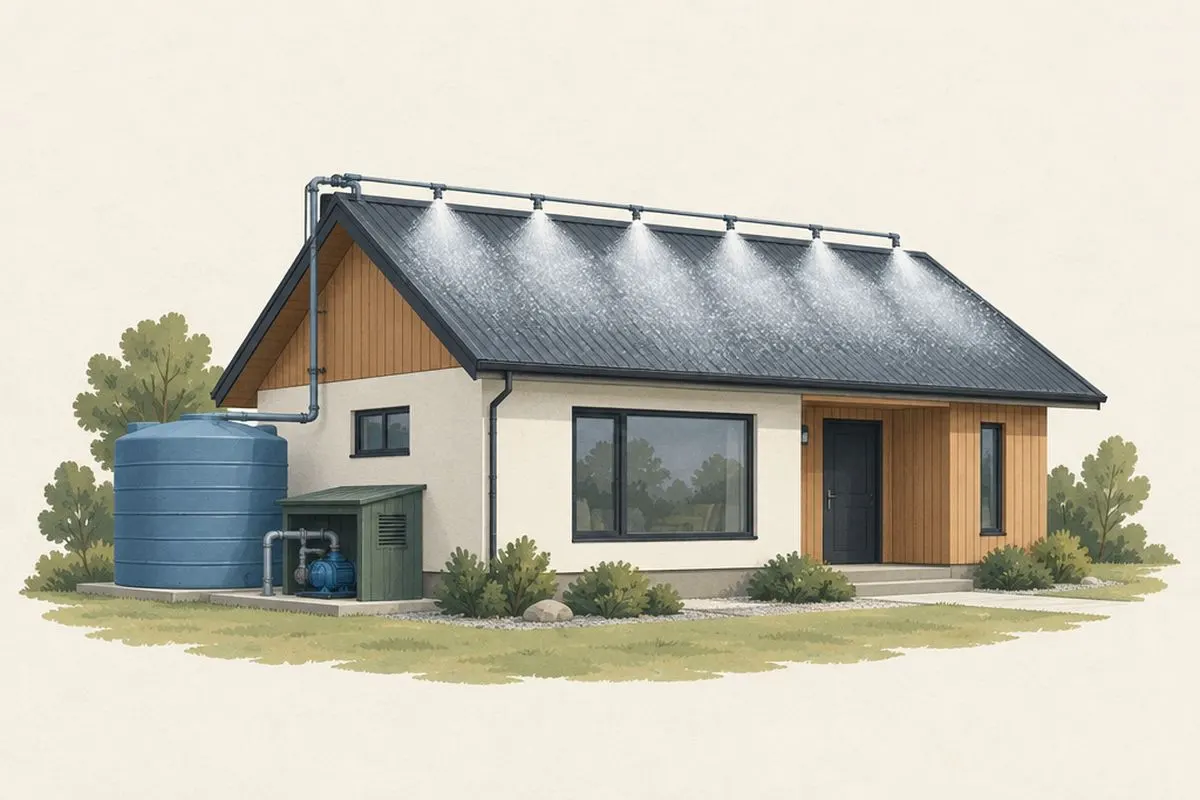
A brass roof-ridge sprinkler that straddles the peak and throws a wide circular pattern over both roof slopes. Originally from Australia, where roof sprinklers are standard in bushfire zones.

Why we like it

  • All-metal construction survives radiant heat
  • Wide coverage per head
  • Semi-permanent mount stays in place all season

Watch out for

  • Needs ladder access to install
  • Higher flow demand per head
Best for

Single-storey homes with a simple gable roof.
Read the full market guide — costs, install effort and alternatives ↓
Market guide

The whole commitment, end to end

What this actually is, what the market looks like, what it really costs, and how much of your time it wants — before you spend anything.

Buying it Easy
Installing it Easy
Living with it Easy
Up front

CAD $120–$350 per head. A typical bungalow needs 2–4; a two-storey with a complex roof, 4–6.

Lead time

Usually in stock; summer shortages are common

Time to install

15–30 minutes per head once you have decided placement

How it works

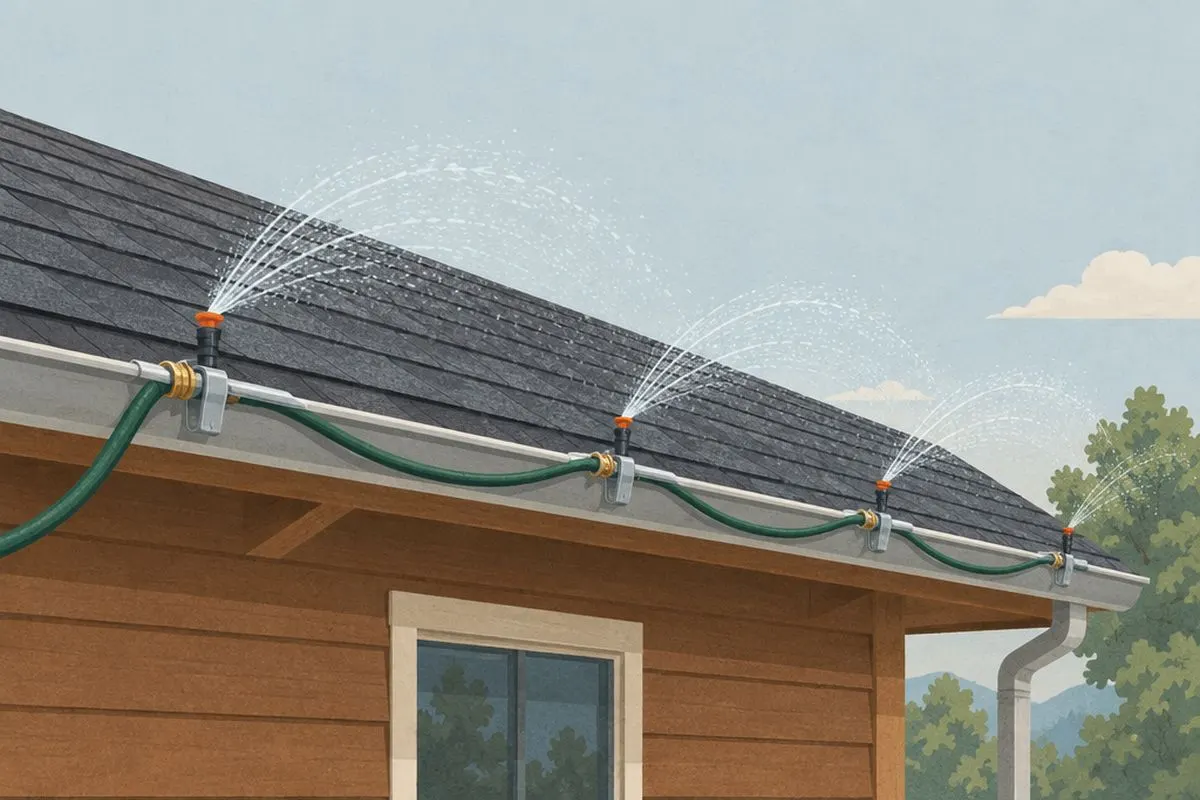
A single high-throw sprinkler head, usually ridge- or gutter-mounted, that puts a wide wetted circle over the roof from fewer positions than a clip-kit needs. You buy heads individually and place them to cover the roof with overlap, then feed them from a garden hose or a pump.

What the market looks like

Single-head roof sprinklers are the value tier of purpose-built wildfire wetting — the space between a $60 lawn tripod and a $1,500 multi-head kit. Buyers here are people who want real roof coverage but are willing to do the geometry themselves. Competition is mostly Canadian and mostly small: Platypus, several Alberta-built equivalents, and a long tail of no-name imports that look similar and throw half as far. The specification that separates them is wetted diameter at 40 psi, which the serious brands publish and the imports do not.

Features that actually matter

High throw per head
A well-placed head covers 12–18 m diameter at residential pressure, so two or three can cover a small roof.
Buy individually
No kit markup. Scale one head at a time as budget allows.
Ridge or gutter mount
More placement freedom than a gutter-only clip, which matters on hipped and multi-level roofs.
Low-pressure design
Rated to give useful coverage from a standard tap, and to work properly when you upgrade to a pump.
Metal internals on the better models
Worth paying for. Plastic bearings in an impact head are the first thing to fail after two seasons of hard water.

What it really costs

Up front
CAD $120–$350 per head. A typical bungalow needs 2–4; a two-storey with a complex roof, 4–6.
Consumables
None beyond water — roughly 400–900 L/hour per head.
What else you'll need
Hose and splitters, CAD $100–$300. Mounting brackets if you ridge-mount rather than clip.
Over five years
Purchase price plus the occasional replacement head. Cheaper over five years than most kits.

Figures are typical street prices in Canadian and US dollars as of September 2026, gathered from public retail listings. They move with the season and with the exchange rate — treat them as a planning band, not a quote.

How it differs from the alternatives

Versus WASP
Better throw, better on steep and irregular roofs, cheaper per unit of coverage. Costs you the design work — you have to figure out placement yourself instead of following a kit diagram.
Versus a hardware-store impact sprinkler
Same operating principle, roughly triple the throw at low pressure and built to survive being run wide open for six hours. The cheap one will stall at 30 psi with three heads open.
The pressure trap
Two heads on one tap is fine. Five is not — pressure divides and every head throws short. This is the single most common mistake in this category, and it is why the pump matters more than the head.
01

Buying it

Effort Easy

Where: Direct from the manufacturer, Canadian wildfire equipment suppliers such as Flash Wildfire Services, and some rural farm-supply stores.

Lead time: Usually in stock; summer shortages are common

Ask for the wetted-diameter figure at 40 psi before you buy. If nobody will give you one, buy something else.

02

Installing it

Effort Easy

Time: 15–30 minutes per head once you have decided placement

You'll need: Ladder · Adjustable wrench · Teflon tape · Garden hose

Decide placement with the sprinkler running, on a calm day in spring, and mark the spots. Chalk the dry patches on the roof and move a head until they close up.

03

Living with it

Effort Easy

Flush after each season — mineral scale is what kills impact heads. Store dry. Retest each spring.

If not this, then what

  • WASP full kitFaster to install, easier to get right, more money.
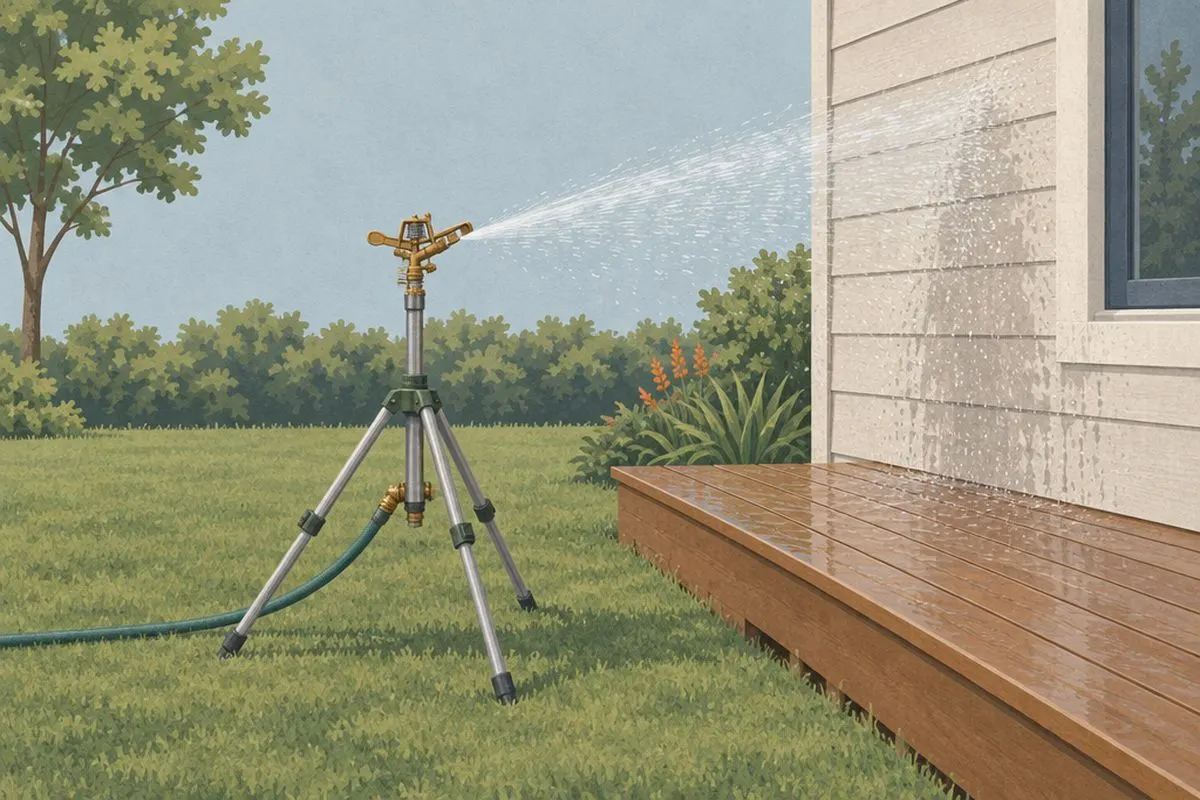
  • Tripod impact sprinklersFor the yard, fence line and outbuildings. Not for the roof.
Our verdict

The best value per litre on the roof, if you are willing to spend an afternoon in the spring working out where the heads go. Pair with a pump before you buy a fourth head.

We don't take payment for placement and we don't sell these products. If you think we've got something wrong here, tell us — we'll correct it.