Reader-supported. Some links are affiliate links — see our disclosure. Evacuate when ordered; no product replaces leaving early.
Essential add-on

1.5 in Fire Hose & Fog Nozzle Kit

Various United States & Canada $$ · 50 ft or 100 ft lengths; NH or camlock fittings

Real fire hose with a fog/straight adjustable nozzle. Match the fitting thread to your pump (NH/NST in North America). Garden hose melts and kinks; this doesn't.

Why we like it

  • Handles pump pressure
  • Fog pattern knocks down embers
  • Lays flat for storage

Watch out for

  • Thread standards are confusing — check before buying
Best for

Anyone buying a fire pump.

Read the full market guide — costs, install effort and alternatives ↓
Market guide

The whole commitment, end to end

What this actually is, what the market looks like, what it really costs, and how much of your time it wants — before you spend anything.

Buying it Moderate
Installing it Easy
Living with it Easy
Up front

CAD $600–$2,000 for a practical kit — two to four 50 ft lengths, a nozzle, a gated wye and adapters.

Lead time

2–6 weeks from distributors

Time to install

Setup 10–20 minutes for a typical lay

How it works

Real 1.5 inch fire hose and a fog nozzle — the same equipment a wildland crew carries — connected to a pump. Fire hose is not big garden hose: it is designed to carry high pressure with low friction loss, which is what lets you move usable water 30–60 m to a roofline instead of losing all your pressure in the line.

What the market looks like

Hose is sold by forestry and firefighting supply distributors in standard 50 or 100 ft lengths, at CAD $150–$500 per length depending on construction. The market splits between single-jacket forestry hose — light, cheap, adequate for structure protection — and double-jacket municipal hose, heavier, tougher and roughly double the price. Nozzles range from a CAD $80 basic fog nozzle to CAD $600 for a professional adjustable-gallonage unit. For homeowner structure protection, single-jacket 1.5 in hose and a mid-range fog nozzle is the honest answer.

Features that actually matter

1.5 in diameter
The standard for structure protection. 1 in forestry hose is lighter but chokes the flow a serious pump can deliver.
Low friction loss
The reason it is not garden hose. Fire hose delivers usable pressure at the far end of a long lay; garden hose does not.
Fog nozzle
Adjustable from straight stream for reach to wide fog for heat protection and self-shielding. The fog pattern is a genuine safety feature, not a convenience.
Standard threads
NPSH or NH — match your pump and match your neighbours if you may ever share. Mismatched threads are the classic day-of failure.
Storage
Sold rolled or in a hose pack. It needs to be dried after use or it mildews.

What it really costs

Up front
CAD $600–$2,000 for a practical kit — two to four 50 ft lengths, a nozzle, a gated wye and adapters.
Consumables
None, but gaskets perish and should be replaced every few years.
What else you'll need
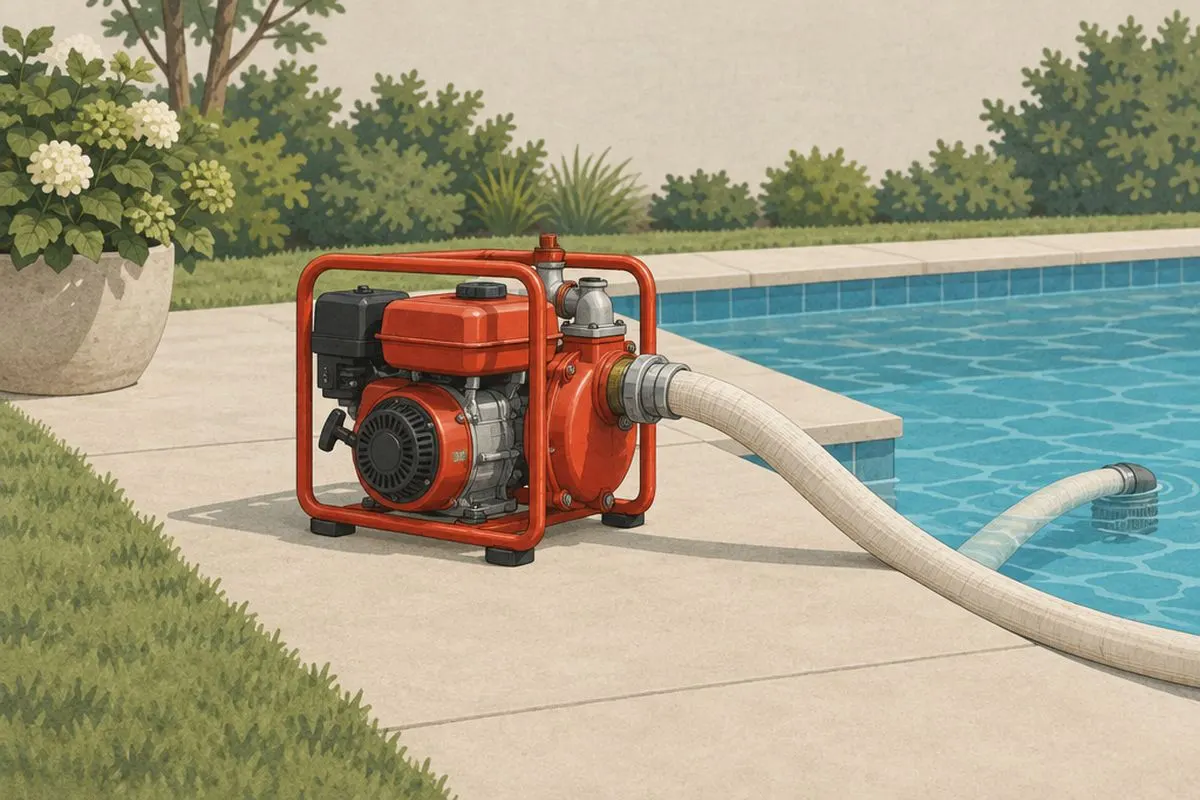
A pump. Without one this is decorative.
Over five years
CAD $100–$300 in gaskets and the odd replacement length. Well-stored hose lasts decades.

Figures are typical street prices in Canadian and US dollars as of September 2026, gathered from public retail listings. They move with the season and with the exchange rate — treat them as a planning band, not a quote.

How it differs from the alternatives

Versus garden hose
At 30 m and 40 psi, garden hose has given up most of its pressure to friction. Fire hose has not. If you have gone to the expense of a pump, hooking it to garden hose throws away most of what you paid for.
Single versus double jacket
Single is lighter, cheaper and easier for one person to move. Double survives being dragged over gravel and hot ground. For homeowner use, single-jacket is the sensible default.
Thread compatibility
Check what your local fire department uses. If a crew arrives and can couple to your hose, that is worth something. If nobody's threads match, you have four separate private systems on one road.
The physical reality
Charged 1.5 in hose is heavy and it kicks. One person can manage it; it is not effortless. Practise with water before you need to.
01

Buying it

Effort Moderate

Where: Forestry and firefighting supply houses, wildfire equipment specialists. Occasionally good used hose from fire department surplus — pressure-test it before trusting it.

Lead time: 2–6 weeks from distributors

Buy the adapters at the same time as the hose. The most common story in this category is a complete kit that will not connect to the tap, the pump or the neighbour's line.

02

Installing it

Effort Easy

Time: Setup 10–20 minutes for a typical lay

You'll need: Spanner wrenches for the couplings · A hose roller or just patience

Lay it out once, in the spring, along the route you would actually use. Note where it snags, where it crosses a driveway, and whether the length reaches the far corner. Store it where you can get it in the dark.

03

Living with it

Effort Easy

Dry thoroughly after every use — wet hose rolled up mildews and rots. Check gaskets annually. Reroll differently each year so it does not take a permanent set.

If not this, then what

  • Heavy-duty garden hose and a firefighting-style nozzleA fraction of the cost, a fraction of the reach and pressure. Reasonable for a small lot with municipal pressure; wrong behind a real pump.
  • Fixed sprinklers instead of a hose lineRuns unattended. A hose needs a person, but goes exactly where the problem is.
Our verdict

Buy it as part of the pump decision, never separately, and buy the adapters in the same order. The most expensive mistake here is a good pump joined to the house by garden hose.

We don't take payment for placement and we don't sell these products. If you think we've got something wrong here, tell us — we'll correct it.