Independent and reader-supported. Some links are affiliate links — see our disclosure. Codes vary by province, state and city: confirm with your local fire authority.
Phone alerts when you're not home

Smart Smoke & CO Alarm

First Alert / Various Canada & United States $$ · Several times the price of a standard alarm

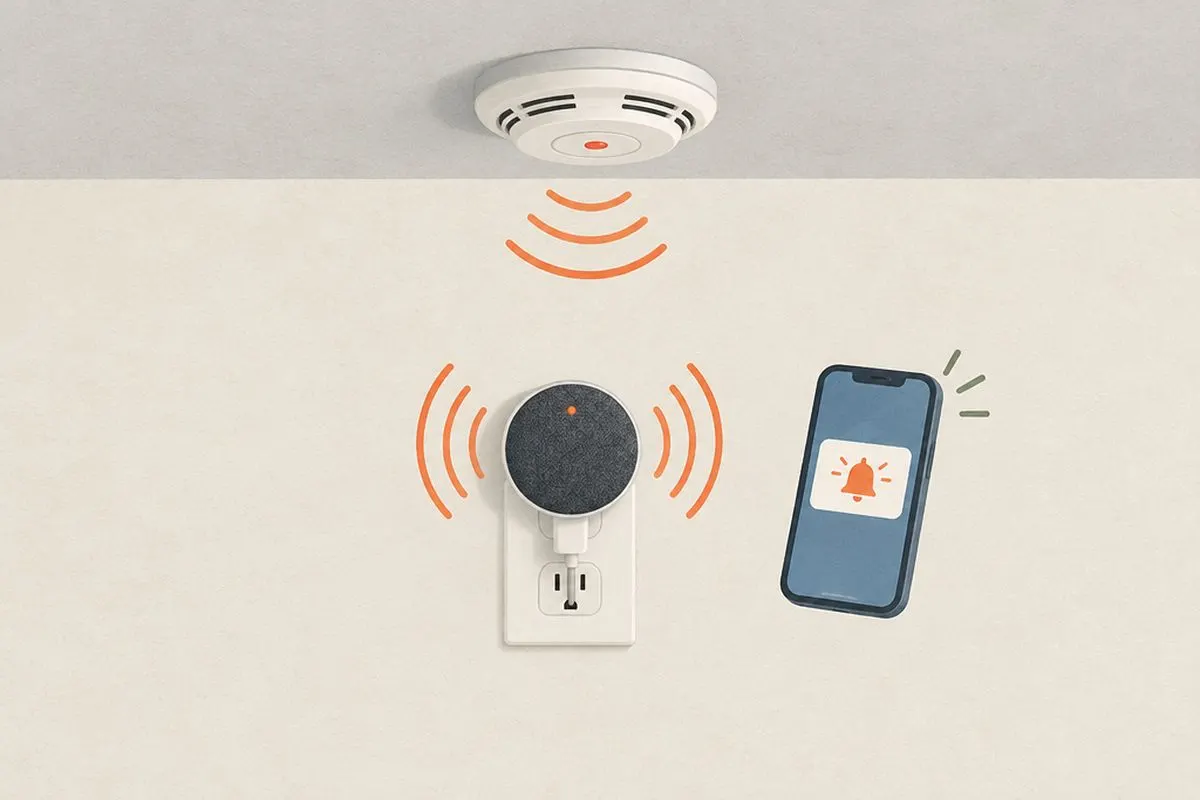
A mains or battery alarm with Wi-Fi, sending a push notification to your phone as well as sounding locally. It tells you your house is on fire while you are at work, which a standard alarm cannot do.

Why we like it

  • Alerts you when nobody is home — the gap a local siren cannot fill
  • Voice announcements naming the hazard and the location
  • Self-test and low-battery reporting in the app rather than by chirp

Watch out for

  • Depends on Wi-Fi and mains power, both of which fail in fires
  • Notifying you is not the same as notifying the fire department
Best for

Second properties, rentals, and anyone who travels and wants to know rather than find out later.
Read the full market guide — costs, install effort and alternatives ↓
Market guide

The whole commitment, end to end

What this actually is, what the market looks like, what it really costs, and how much of your time it wants — before you spend anything.

Buying it Trivial
Installing it Easy
Living with it Easy
Up front

CAD $130-$220 per unit — roughly four times a good sealed alarm.

Lead time

Days

Time to install

20-30 minutes per unit including app setup

How it works

Standard detection hardware plus a Wi-Fi radio and a cloud service. When the alarm sounds it also publishes an event, and the app pushes it to your phone. Most models also interconnect with each other so the whole house sounds, and announce in speech which hazard and which room.

What the market looks like

This category went through an upheaval in 2025 when Google discontinued Nest Protect, for a decade the default recommendation, and partnered with First Alert instead. The successor First Alert smart alarm sits around CAD $170 and interconnects with existing Nest Protect units, which is unusually decent behaviour toward stranded customers. Existing Nest Protects continue to receive updates to their expiry. Beyond that the field is thinner than it was, with various smaller brands and a lot of cheap Wi-Fi units of unclear certification. Treat certification as non-negotiable here: this is a life-safety device first and a smart-home gadget second.

Features that actually matter

Push notification
The single reason to buy one. It converts a device that only shouts into the room into one that reaches you anywhere.
Voice announcement
Says whether it is smoke or CO and which room. Meaningfully better than a pattern of beeps in a panic.
App-based self-test
Reports its own health and battery state, which removes the reason people stop testing manually.
Interconnection
Links to other units of the same family so one detection sounds the house. Check compatibility before mixing product lines.
What it is not
Not monitored. Nobody is watching the app but you, and no fire department is dispatched by a push notification.

What it really costs

Up front
CAD $130-$220 per unit — roughly four times a good sealed alarm.
Consumables
Batteries on battery models.
What else you'll need
A reliable Wi-Fi signal where the alarms are, which in a basement or detached garage is not a given.
Over five years
Purchase price. Replacement at ten years from manufacture applies here too.

Figures are typical street prices in Canadian and US dollars as of September 2026, gathered from public retail listings. They move with the season and with the exchange rate — treat them as a planning band, not a quote.

How it differs from the alternatives

Versus a standard alarm
Identical protection for anyone inside the house. The entire premium buys you notification when the house is empty.
Versus professional monitoring
A smart alarm tells you. Monitoring tells the fire department. If the scenario you are buying for is an empty house, ask honestly whether a phone alert while you are four hours away is what you actually wanted.
Versus a listener
A listener costs a third as much and works with the alarms you already own, at the price of adding a second point of failure.
Platform risk is real
Nest Protect was the category leader for a decade and was discontinued. Cloud-dependent life-safety devices inherit their vendor's business decisions, which is an argument for keeping at least some conventional alarms in the house.
01

Buying it

Effort Trivial

Where: Big-box electronics, Amazon, smart-home retailers.

Lead time: Days

Confirm UL 217 or CAN/ULC-S531 certification on the specific model. Cheap uncertified Wi-Fi smoke alarms exist and are not life-safety devices.

02

Installing it

Effort Easy

Time: 20-30 minutes per unit including app setup

You'll need: Drill · Screwdriver · Ladder · Phone

Set them up on a 2.4 GHz network if the unit needs one, and test that the notification actually arrives on every household phone before you consider the job done.

03

Living with it

Effort Easy

Verify push notifications still work after any router or phone change — this is the part that silently breaks. Keep the app installed and logged in on more than one phone.

If not this, then what

  • Smoke and CO listenerMuch cheaper, uses your existing alarms, and on Amazon Sidewalk it works without your Wi-Fi.
  • Professional monitoringThe only option that dispatches anyone.
  • A sealed ten-year alarmA quarter of the price and identical protection for people who are home.
Our verdict

Buy it for the empty-house scenario and nothing else — for anyone actually in the building it is no better than a CAD $35 alarm. And be clear that it notifies you, not the fire department.

We don't take payment for placement and we don't sell these products. If you think we've got something wrong here, tell us — we'll correct it.